

A Radio NZ interview this week with Black Barn’s Kim Thorp on prospects for the wine industry inspired me to tease out more comment from Kim myself. One would be very hard pressed to find a more insightful thinker than Kim on strategic marketing matters.
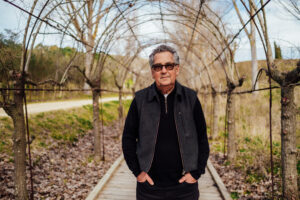
He has just returned from the Great Wine Capitals AGM in Bordeaux. This is the elite grouping of the world’s top 12 wine producing regions, to which Hawke’s Bay was admitted in 2023, as BayBuzz reported here.
As a panelist Kim was asked to comment on the challenges currently facing the wine industry – global challenges, not necessarily NZ-specific, but “to which NZ is certainly not immune”, as he sees the situation.
The overarching point he raises is determining whether industry players believe these current issues are the beginning of a long term trend or simply a blip.
He says: “If they are a blip we probably need to develop plans to ride them out, hold on to our hats and manage through them. If they are the beginning of a longer term trend we probably need to rethink our strategies and start implementing real change to adapt to them.”
Kim sees four broad challenges facing the industry … “each is of enough significance that if even one of them was a trend rather than a blip, it would probably justify some significant thinking and planning.”
The bad news: “I have a feeling however, that all four might in fact be long term trends rather than blips.”
These are the four challenges Kim identifies:
1. “The changing role of alcohol in our social lives. There is a global reduction in alcohol consumption with wine one of the most significantly impacted. Wine consumption is down 70% since the 1960’s in France. It is the lowest since prohibition in the US.” BayBuzz has reported the figures on this decline previously.
2. “Climate. Is what we are currently growing where ‘match fit’ for a changing climate?”
Grape growing is all about the variables of temperature and moisture after all … and where are these headed for each (current) major producing region?
3. “Working with Mother Nature is expensive. As it should be, wine is heavily reliant on the whims of nature. Which is perhaps one the reasons so much of what we consume and put in to our bodies has ‘come indoors’ and is now made in large factories using heavily industrialised ingredients and methods. The simplicity of soil, sunshine, rain and manual harvesting was once the basis of all human food consumption – it is globally becoming one of the most expensive.”
The RNZ interviewer had asked Kim about options like producing ‘low alcohol’ or “low sugar’ wine. He isn’t keen, to put it mildly, on attempting to make this product of nature into something unnatural … “butchering the wine” as he termed it.
4. “In an age where B2C (Business to Customer) communications and sales are getting simpler, faster, cheaper and easier we often still have very long and tortuous methods and procedures simply to get a bottle of wine from where it’s made to where it’s consumed. This involves a complex and expensive matrix of logistics, taxes and multi-tiered margins.”
Moreover when, nowadays, more than half of NZ’s wine is bulk-exported in polythene bags and sold (virtually all of it sauvignon blanc), as wine expert Michael Cooper puts it, “under supermarket brands you and I have never heard of,” it’s hard to see how NZ’s better wines are advantaged long-term.
In our March/April BayBuzz magazine, Yvonne Lorkin will be reporting how various Hawke’s Bay winemakers are attempting to deal with the market challenges Kim describes.

Yep, NZ wine inc is facing a difficult future. Looking back, the corporatisation of the industry, same as Apples Cherries , i’d include dairy etc, has given us rapid development but at a cost, especially to the shareholders and smaller wineries and growers.
In the 70’s i was at school in Havelock and there were 464 family orchards suppling the Apple and Pear board., today 18 companies control almost %90 of the industry and two of them over %50. I have been told %80 of our wine industry is corporate. I’d love for someone with more knowledge than me to comment on this. The risk of corporatisation is that they link arms with Gov’t and we end up in a Fascist State. The Rapid growth of Cherries in the South Island has completely out grown the Japanese market. Corporates with shareholders money chasing returns that were an illusion. Now we face an AI future where many well paying jobs won’t exist, like billable hours for Lawyers, that model is collapsing now. As Elon Musk said, in. a warning last week, we think lineally while AI is exponential.
We stay away from the corporate wineries – much prefer to seek out small wineries where there’s a good chance of meeting the winemaker and having a chat about his product. That being the case we do try very hard to make inroads into the wine stocks of those wineries – and will continue to do so – when we came to the Bay there were around 40 cellar doors – now there’s probably only about 20 – so many taken over by corporates!
Very hard for small wineries to get into restaurants in Auckland. They all have same wine lists.
The classic complete screw up is the purchase of large scale NZ apple production by Baywa, They own T & G. Instead of a lot of family orchards you have a massive conglomerate with a huge foot print worldwide, along with huge debts and massive losses and financial turmoil.
BayWa is the type of investment the country didn’t need and show the risks of political involvement via the OIA, which is happy to approve the sale of NZ to foreign investment which in turn puts a lot of these small businesses out of the reach of other farmers and investors. Carbon investment is another area which should be attracting much more scrutiny. I suppose an Asian investor will want BayWa at the right price, this as we slowly sell the country to the highest foreign bidder.