


[As published in January/February BayBuzz magazine.]
Louise Stobart
Owner of Birdwoods with husband Bruce
Lift the level of hospitality service
Seeing people leave Birdwoods feeling better than when they arrived is what fuels Louise Stobart’s drive for what she does. Providing customers with exceptional service is therefore at the heart of her hospitality business, and her big ideas for the future.
Louise and her husband Bruce have spent 20 years building up their multifaceted and hugely popular visitor destination located just outside Havelock North, which includes a cafe/restaurant, sculpture gardens, nostalgic sweet shop, ostriches and a summer ice cream shop.
Originally farmers in Zimbabwe, the couple purchased a 10-hectare property and established Birdwoods, without any training in hospitality. The seven-days-a-week-operation has been a joyous and tough learning curve.
Staff and the service they provide, are Louise’s key focus for the future. Hawke’s Bay has been through a tough time with Covid and the cyclone and it needs to bring visitors back by positioning itself as a place where visitors have incredible experiences where they stay, with what they eat, what they drink, she says. Part of that is making sure the region aspires to a high level of service. “We love Hawke’s Bay, we know that it’s been through a tough time and we really want to support a future where it just gets better and better here and be part of that in our small way.”
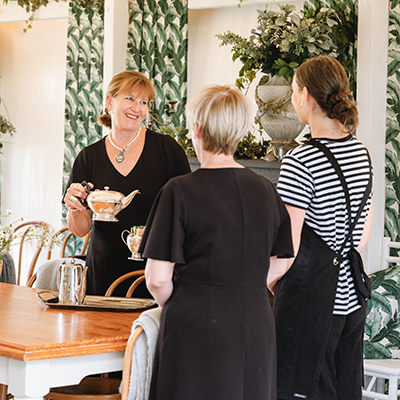
Louise also wants to lift the perception and treatment of hospitality workers in New Zealand, so young people see it as a career rather than simply a pathway to somewhere else. “It’s not given the credit and respect it’s due – you have to be good at many things, think on your feet and operate under immense pressure – and you’re generally not paid what it’s worth.” At Birdwoods, new staff undergo rigorous training and leave with a certificate showing their skills. Louise wants to work more in this area so their staff develop a sense of pride, confidence and communication skills that will last a lifetime.
Long-term, we also need to be creating more experiences around Hawke’s Bay, says Louise. People come to Birdwoods to build memories with their family and the plan is to keep creating more opportunities for those experiences. Louise and Bruce are planting a living church (a church-like structure made from trees that people can get married under), looking to expand into events and even trying to source zebras – “these are the things people love”.
For their personal future, a succession plan is underway for their eldest son Jack – a successful sculptor and owner of Birdwoods in Arrowtown – to take over the reins. Louise and Bruce would continue to provide support to the business but would have more time to enjoy the life they’ve built.
*****
Fiona Fraser
Fiona is the director of Contentment PR and Communications and co-chair of the Heretaunga Women’s Centre.
Urban apartments and a tram
Quality inner-city apartments, better public transport and a dedicated multi-day destination cycle tour are all ways Hawke’s Bay could become an even better place to live and visit, says Fiona Fraser.
There is so much to love about Hawke’s Bay and what it has to offer, but we need to keep thinking big so the region can continue to flourish, says the media specialist, who moved to the Bay from Auckland with her family eight years ago after falling in love with the lifestyle.
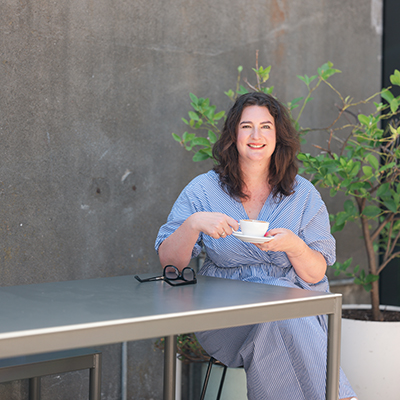
Before long, the former Women’s Weekly editor established her PR and communications business after seeing a gap in the market – lots of remarkable small businesses not getting the media attention they deserved.
Through her work, and community roles as co-chair of the Heretaunga Women’s Centre and a board member for Havelock North High School, she understands many of the challenges facing the region and its potential.
To that end she has three key big ideas for its future. The first is to create high quality apartment living in the inner cities. This would attract more young people, support new retail and hospitality and create vibrant, safer city centres – something she feels is hugely lacking. “When you walk through Napier on a Thursday night at 8pm it’s a ghost town because no one lives in the central city.”
Fiona also advocates for light rail or a tram between Hastings and Napier, using the existing railway lines. “I know how expensive it can be to get something like that up and running. I’m not saying it would be easy, but our public transport is woeful.” This would give locals and visitors access to reliable transport to move within and between the cities, including the airport, and remove the need for everyone to have cars.
Finally, Fiona sees an opportunity to create a unique cycling visitor experience. “We are an amazing hub for tourism and we have amazing events here … but what we don’t have is a dedicated multi-day guided cycle tour.”
Think Alps to Ocean from Aoraki/ Mt Cook to Oamaru or Mountains to Sea from Tongariro National Park to Whanganui. For example, Norsewood to Napier could be an incredible two-day ride that would take cyclists through the backcountry of Central Hawke’s Bay, staying at farm accommodation and historic lodges along the way. We have more infrastructure than some of the other regions, such as the West Coast, that are offering it. If they can do it we can too, says Fiona. “If someone could create that route and bring a business to life that would support all kinds of cyclists, it would give us another offering in Hawke’s Bay.”
*****
Miranda Smith
Founder of Miranda Smith Homecare.
Meaningful connections
If we all took a little more time to talk, to connect with the people around us, we could significantly reduce loneliness. That’s Miranda Smith’s hope for Hawke’s Bay.
In New Zealand, according to a 2021 Stats NZ report, 56% of people felt lonely, with 15-24 year-olds and those aged 75 and older, the loneliest age groups.
In spite of being more connected than ever before in the digital age, we are lonelier than ever. And it’s affecting our mental and physical health.
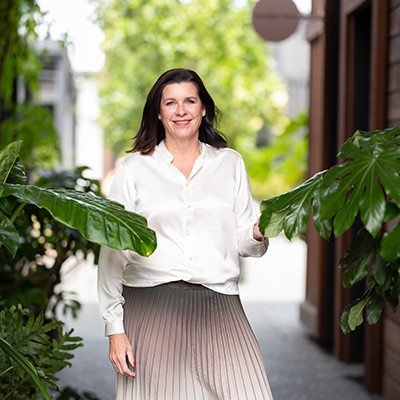
Miranda Smith has seen the impact first-hand. As the founder of Miranda Smith Homecare, and having been in the industry for 26 years, she sees the detrimental impacts of loneliness. Older people are often at high risk, given their stage of life. Many have lost spouses, family and friends. Perhaps If we all took a little more time to talk, to connect with the people around us, we could significantly reduce loneliness. That’s Miranda Smith’s hope for Hawke’s Bay.
In New Zealand, according to a 2021 Stats NZ report, 56% of people felt lonely, with 15-24 year-olds and those aged 75 and older, the loneliest age groups.
In spite of being more connected than ever before in the digital age, we are lonelier than ever. And it’s affecting our mental and physical health.
Miranda Smith has seen the impact first-hand. As the founder of Miranda Smith Homecare, and having been in the industry for 26 years, she sees the detrimental impacts of loneliness. Older people are often at high risk, given their stage of life. Many have lost spouses, family and friends. Perhaps If we all took a little more time to talk, to connect with the people around us, we could significantly reduce loneliness. That’s Miranda Smith’s hope for Hawke’s Bay.
In New Zealand, according to a 2021 Stats NZ report, 56% of people felt lonely, with 15-24 year-olds and those aged 75 and older, the loneliest age groups.
In spite of being more connected than ever before in the digital age, we are lonelier than ever. And it’s affecting our mental and physical health.
Miranda Smith has seen the impact first-hand. As the founder of Miranda Smith Homecare, and having been in the industry for 26 years, she sees the detrimental impacts of loneliness. Older people are often at high risk, given their stage of life. Many have lost spouses, family and friends. Perhaps they can no longer drive – further adding to their sense of isolation. For some, their carer might be the only person they speak to that day. “They feel embarrassed that they are now lonely and don’t want to be a burden to others,” says Miranda.
There’s strong evidence a lack of social interaction has a huge cost on the health system, causing cognitive decline and increasing the risk of disease. And society loses out as well, says Miranda, as older adults are major contributors to communities through volunteering, mentoring and support for family.
Reducing the burden of loneliness is therefore a win-win. “Older New Zealanders will feel a lift to their health and sense of wellbeing, and they will be much more likely to continue to make an active and valuable contribution to their communities and society.”
But they need our help, and it’s up to all of us to reach out and help make that difference, says Miranda. Her goal is for every person who reads this, to make time for a meaningful connection with someone once a month. It could be someone you know or don’t know, possibly a wider family member, neighbour or the person standing next to you in the supermarket line. She asks that you spend an extra 10 minutes when someone wants to chat longer than anticipated. “Show that you are interested, be totally invested in the conversation. If it is a fleeting conversation, ensure that it is meaningful as that is what will help combat loneliness.”
If it’s someone you know, like a family member or neighbour, call them, plan to visit for a cup of coffee, or pop in unexpectedly. It’s everyone’s job to instigate meaningful connection. The emotional reward is not only for the person you are engaging with, but it will also make you feel grateful you could make a small difference to someone that day. The difference will benefit us all.
*****
Chris Proctor
Head boy at Lindisfarne College and chair of the Hastings Youth Council
Get youth better engaged in community
Connections with other people are the foundation of Chris’s ideas, whose plans aim to encourage young people in Hawke’s Bay to embrace opportunities and vote.
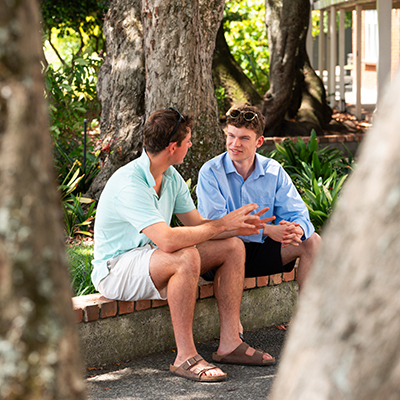
The ideas are borne out of the lessons Chris learnt as a 10-year-old when he immigrated (to the Bay) from Germany and couldn’t speak English. It was during those first two years when a young Chris was struggling to communicate that he learnt the power of meaningful connection through joining a photography course. As well as friendship, the experience helped him put down roots and get passionate about something.
That early lesson about the impact people can have on our lives still rings true for the now 17-year-old and the other boys at Lindisfarne College. “That’s the most powerful thing I’ve seen – when there’s a person there that looks at you and goes ‘Hey, I reckon you can do this’. That connection is pretty powerful,” says Chris.
Which brings us to Chris’s first big idea. He and outgoing head boy, Fergus Morunga, are in the final stages of planning a leadership programme for Lindisfarne.
The boys wanted to create something that would leave a lasting, positive impact on the school. The aim is to create a programme that taps into the incredible network of inspirational people in our region, asking them to give some of their time to speak at assemblies and potentially to provide mentorship to students. From business leaders, to community leaders, sports people, to farmers and judges, Hawke’s Bay is full of talented people who can encourage the next generation to dream big, says Chris. The boys are working on a booklet to accompany the programme, where students can write down their goals, quotes from speakers and information from mentorship sessions.
In the same vein, connection is also key to Chris’s second big idea – to get young people more engaged in the democratic process.
As chair of the Hastings Youth Council, Chris has seen first-hand the issues around low voter turnout for local elections, especially among the young demographic. “It’s hard to watch only 20% of people voting and calling it democracy.” Chris suggests bringing official voting boxes into schools so eligible students can vote onsite, as well as having someone from the Electoral Commission talk to students about why they should vote. It’s about helping young people understand the process and showing them that it is relevant to them. “Local elections are so not sexy at all to those boys. It’s boring as, like road rubbish and road cones, but once you dig a little bit deeper you actually see there’s quite a lot more than that.”
*****
Kunjay Patel
Managing director of Te Mata Peak Practice in Havelock North
Better healthcare for Māori and Pacific Islanders
Kunjay Patel isn’t scared to take an innovative approach when it comes to improving healthcare. “You can’t complain about the same thing over and over again unless you make a change,” he says.
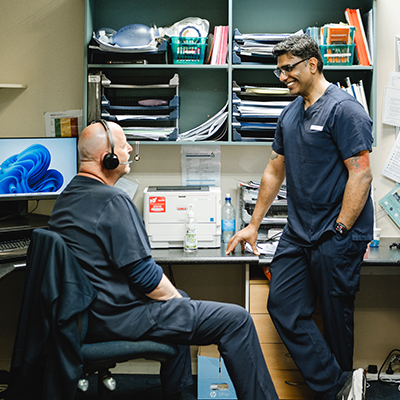
The managing director of Te Mata Peak Practice accepts he can’t change government decisions, which he says have routinely let them down, but he and his team can change the way they provide care to patients. “They (the government) don’t understand primary care but I can make a conscious choice to run a practice with my team differently, with different views and different focuses than might be traditional. We’re free to take a few risks here and there.”
Recent changes at the practice include a new triage and appointment booking system, an increased nursing team and different pathways for treatment. Now, nurses, nurse practitioners and extended care paramedics treat patients where appropriate, to free up GPs to see the patients who really need them. The results speak for themselves. What used to be a 7-day wait for treatment last year (which was very good compared to national standards), is now 0-2 days. He would love to see access times for healthcare reduce for everyone in Hawke’s Bay.
Freeing time for GPs also allows them to develop specialist interests and offer more extensive services to patients, such as skin health, an anonymous sexual health service, ADHD, complex health issues, women’s health issues and cognitive stimulation therapy for patients with dementia. This in turn encourages GPs to stay with the practice.
Another area where Kunjay would like to see change in Hawke’s Bay is Māori and Pacific Islands healthcare. “I would love to see our Māori and Pacific Islands community being able to walk into any health centre and expect excellent care … I just think there shouldn’t be any segment of society that doesn’t have access to excellent healthcare.” There are some Māori specific providers who do an incredibly good job with very limited funding and support, says Kunjay. “I wish that we could all do that for that community.” A lack of cultural understanding, poor education, historical impact and politicization have all contributed to the situation, he says.
Kunjay wants to continue to push for change that can offer better healthcare outcomes for patients and support frontline workers. “You have to accept that when you make a change, that comes with a risk where you may fail, but if you’re afraid to fail then you’ll never change.”
Photos: Florence Charvin

It is so good to see us coming back to our roots. Giving opportunities for those both young and old to be seen and heard. I delight in working with both of these age groups, bringing hope, peace and joy into the hearts and minds of those who need it the most. Thank you to each one of you for your part in making your world a better place to live in. Thank you to Bay Buzz for sharing the good news too. This article alone will positively impact many. Great work all round. Well done.