

Of the agenda. ‘Thanks’ to Donald Trump.
[As published in May/June 2026 BayBuzz magazine.]
Although most of this article will focus on Hawke’s Bay and NZ, it’s worth just briefly reminding ourselves of the planetary threat global warming represents. Lest we lose our sense of urgency.
More and more evidence is stacking up that warming caused by human activity is threatening to push the planet’s critical natural systems past catastrophic ‘tipping points’.
“Key impacts are exceeding what models predicted when it comes to extreme weather, the intensification of hurricanes, ice sheet disintegration and sea level rise,” said Michael Mann, a globally recognised climate expert, in a recent NY Times interview.
One of those tipping points will be the apparently quickening collapse of the Atlantic Ocean currents that drive today’s weather patterns – the planet’s “biggest heat distribution system”, says one expert. Collapse would push Europe into a winter deep freeze, accelerate sea level rise along the East Coast of the US, drive prolonged droughts across a swath of Africa and release enormous amounts of carbon into the atmosphere globally. So global warming increases even while Europe freezes.
Already, many of the world’s populations are experiencing heat previously unimaginable and getting worse, especially in ‘normally’ temperate climates – think most of the US and Europe.
The hottest year in recorded history was 2024, and each of the 10 warmest years on record have come in the past decade, including 2025, one of the three warmest. The rate of heating increase has almost doubled in the last ten years.
A wide array of computer models are beginning to predict a “super El Niño,” when sea surface temperatures in the critical region of the Pacific shoot up more than 2.5 degrees Celsius. If this bears out 2026 and 2027 could be the hottest years ever recorded across the planet.
Heat is causing the release of more and more highly dangerous methane from both vast, formerly frozen tundra and from the oceans themselves, which for eons have been a sink absorbing more than 90% of the Earth’s excess heat.
In 2024, 58 of the planet’s main glaciers suffered the greatest ice loss in 55 years of records. Sea level rise is occurring faster than expected.
Throughout the world, food growing patterns and future capacity are being disrupted.
Meanwhile, our use of energy is not diminishing in the aggregate, even as presumably ‘greener’ energy generation increases. Although per capita energy use is flat or falling in many developed countries (NZ is flat to slightly declining), it is rising elsewhere, with total consumption expected to continue increasing through at least the 2030s.
And of course Trump’s war now reminds us of our addiction to oil in particular, and the dramatic economic costs of that dependence … from price (and access to) air travel, shipping and petrochemicals (e.g. plastics and fertiliser) to household budgets for fuel and every product that carries an embedded transportation and/or packaging cost.
That’s where we sit today.
So, now what?
Trump’s folly forces our attention to our fossil fuel consumption in particular and our energy dependence in general.
Forget climate change and ecosystem peril, jump right to the bottom-line … protecting our wallets and national economy (indeed national security). A much more powerful motivator for behaviour change, if there is to be any.
Here in Hawke’s Bay, as BayBuzz has steadily documented , it is businesses that are taking the lead in reducing energy demand … because it directly improves bottom-lines, with the side benefit of evidencing environmental concern. In fact, we’re seeing businesses that can’t do that, die. Think paper mills and McCain.
The key point here is that there is no successful response to climate change that is not grounded in ratcheting down the energy intensity of our households, businesses and national economies. And that applies whatever the source of that energy, a point I’ll come back to.
Our current Government is no help in this matter. They have done nothing that would help wean us off energy consumption.
Instead, they’re busy building roads, neglecting public transportation, protecting the import of fuel inefficient vehicles, championing oil and gas exploration, keeping the cost of carbon emissions artificially low, and delaying our day of reckoning with biogenic methane (mainly cows).
Their initiatives regarding alternative energy, weak as they are (e.g, overdue and minimal funding of EV charging stations), amount simply to shifting more energy use from fossil fuels to electricity generated by ‘greener’ means – hydro, wind and solar.
Electricity is only 18-20% of NZ’s total energy use.
Electrification is the touted goal these days, when the real objective must be less energy use per capita, per household, per business, per Hawke’s Bay, per NZ.
“Wait a minute,” I hear you ask, “Is BayBuzz saying we shouldn’t buy EVs and put solar panels on our roofs?!”
Less energy vs more electricity
The answer to that question is complicated. Your EV and rooftop solar will indeed improve your personal carbon emissions profile (with ancillary benefits in terms of operating cost and power resilience), but lurking in the background is all the carbon-supplied energy (and emissions) that went into providing those electric solutions.
Studies show that the embedded energy (and emission) costs of producing an EV exceed those costs for a comparable ICE vehicle. However, over the lifetime use of each, the EV eventually wins the comparison (with public health benefits as well).
Engineers have well-developed methodologies (e.g. ‘levelised cost of energy’ – LCOE) for comparing the relative energy costs of producing a given quantum of usable energy across sources, say, wind, solar and natural gas. The alternative fuels win out on that basis, but then other factors come into play, such as ‘on demand’ availability. This is why NZ planners hang onto the natural gas solution for meeting peaking and dry-year demand.
That problem notwithstanding, NZ is on a path where renewables could exceed 95% of the country’s electricity needs by 2027. In fact, Boston Consulting Group, in an influential review of NZ’s energy requirements, urges that the country should position itself globally as the perfect home for cheap electricity to fuel super-voracious AI farms.
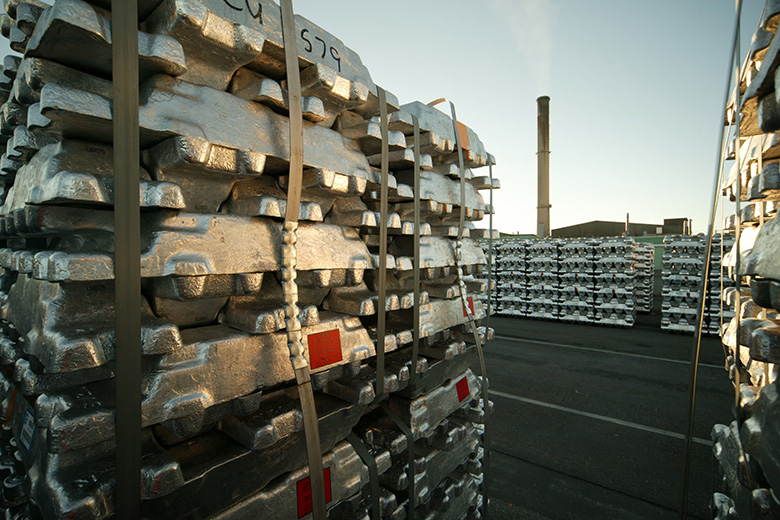
As a point of reference, the Tiwai aluminium smelter uses around 5,000 GWh of electricity annually, 12% of NZ’s entire supply. Enough to power as many as 750,000 homes. The proposed Datagrid Southland AI data centre would use around 2,000-2,500 GWh, potentially 5-8% of national demand, or up to 350,000 homes.
It’s a treadmill. We’re eager to find yet another way to consume energy (electricity or otherwise), but devote scant effort to actually curbing and reducing demand.
Water ecologist Mike Joy has become a strong voice for focusing on reducing energy demand instead of myopically (as he sees it) focusing on decarbonisation and electrification so as to reduce GHG emissions. By concentrating on ‘greener’ ways to produce electricity, he says, we are simply papering over our quest to protect our energy-intensive lifestyle and economies. Joy regards it as a classic re-arranging of the deck chairs on the Titanic. Indeed his presentation is titled, Electrifying the Titanic.
To drive home his point, he uses the example of copper, an essential ingredient in virtually every ‘energy transition’ technology.
Global copper reserves were about 1 billion metric tonnes in 2023; over 4 billion tonnes would be required to service a global renewables-based economy, and it’s getting harder, more expensive and more energy-intensive to find and mine. Mining it generates enormous waste (tailings, slag) as well as carbon dioxide and sulphur dioxide.
Joy calculates that the proposed Taranaki offshore windfarm, with 54 turbines, would require 1.6 million tonnes of earth to be mined and processed to yield the necessary 3,196 tonnes of copper. Looking at NZ’s 10,000MW onshore wind potential, 30,000 tonnes of copper would be needed, requiring 15.4 million tonnes of material to be mined.
And that’s just the copper. Then add silver, zinc, cobalt, graphite and others required for ‘green’ technologies.

As I weigh all this, I’m virtually paralysed. My gut tells me it’s got to be better to drive an EV and live off the grid with a solar array and a big battery (none of which I have at this writing). Maybe I can make that move if I invest successfully in copper.
But then I’ve got Mike Joy in my ear like Jiminy Cricket, telling me I’m fooling myself if I don’t trade my car for a push bike (can’t be an electric) and build a straw bale house.
I agree 100% with Joy that the real issue is reducing all energy use. And we should try to find the personal and political will to make that a priority.
But we seem so far away from finding that will and acting on it, certainly at the government-by-government scale required. Meantime, I just can’t quite absorb that more copper mines (and wind turbines) are more dangerous to the planet than more coal mines or oil wells.
And given the accelerating pace of global heating with its vast destructive and irreversible consequences, I feel the need to take every most immediate step within reach to curb carbon emissions. And worry about the mining tailings later … is that a ‘cop’ out?
One step I advocate is reviving the now-dead HB Climate Action Joint Committee as a Hawke’s Bay Energy Futures Committee, tasked to develop a regional energy strategy. Ideally that would morph into a broader HB Energy Futures Forum with the wider and systematic community, iwi and business engagement required if we are to genuinely address our energyclimate predicament.
Replace, adapt, reduce … What’s your view?
Here is Mike Joy’s slide presentation, but a bit hard to follow without his delivery.


The challenges for us to find community-wide ways to reduce our energy consumption, outlined in this article and Mike Joy’s presentation, are far more important to address for our future wellbeing than the distraction that this visionless, reckless coalition government poses with its 3mth ‘amalgamation’ ultimatum. Saving money, to fuel their myopic obsession with the fairytale of unlimited economic growth will do little to address the long-term environmental and social issues that we face both locally and globally. It is the coalition government who are obsessed with rearranging the deck-chairs on the Titanic rather than facing the greater threat of the looming iceberg that is the polycrisis.
Please don’t let Mike Joy paralayse your electrification efforts! Electrific machines are much more efficient than their fossil fuel equivalents so energy demand automatically reduces. Sure, more could be done to reduce demand further but it absolutely shouldn’t stop electrification.
Focusing on carbon cost or embedded energy of construction without properly covering the lifetime operation is biasing the argument heavily in favour of fossil fuels. EVs don’t ‘eventually’ make up for their embedded energy, driving in NZ they reach that point within two years while staying in use more than ten years.
Where did the Material requirements by Energy Source graph come from? I struggle to believe that solar uses and significant concrete and steel.
Chart is from US Dept of Energy, full reference on p 20 of Joy’s presentation.
Data source: U.S. Department of Energy (DOE), “Quadrennial Technology Review: An Assessment of Energy Technologies and Research Opportunities,” September 2015, p. 390
Thanks. The cited reference there is Argonne National Laboratory. “GREET 2 2014″ which is closed-source so no opportunity to check assumptions. However, the reference is 12 years old and data will be older still, solar has become about 50% more efficient in the last 12 years so the material requirements for Solar PV today are significantly lower than shown. On top of that, screw piles having replaced concrete in solar farms.
This is all without talking about the operating fuel requirements still.
It all looks like the “Butterfly effect” – the flap of a butterfly wing in say South America results in a hurricane in China. All cause and effect. So we change to solar but have to create more carbon effects to get the ingredients for the solar equipment – it’s all very difficult to work out and I’m with Tom – my head hurts thinking about cause and effect as well. I guess the alternatives are – think outside the square world wide or drive on to extinction. Not a lot of choices! No point in giving any Government (anywhere) the solutions as they’re all selfserving and power mad in their own ways. And who listens to the UN (if they’re given the means to sort it out). So it seems we’ll just bumble our way through and slowly descend into extinction mode or revert to tribal savagery as the weather destroys our current way of life. Of course somebody may come up with a solution and, if they survive the wrath of big business and big politics, we may all manage to sort the problem out. Can’t say I’m optimistic – but I hope that it works out for the sake of my grandchildren.