


To set the stage for this ‘refresh and renew’ edition, BayBuzz invited a few of our outspoken compatriots to suggest a ‘new direction’ for Hawke’s Bay. Maybe you can cherry-pick from their provoking ideas to chart your own vision for the region.
For two voices, their big idea, ironically, is to ‘think small’ – work as much as possible toward local self-sufficiency. I sense many in our community are ready to abandon growth for growth’s sake. What about you?
Two contributors call for a serious change in attitude. One says stop whinging about ‘rights’ and instead embrace individual responsibility. Another says the core problem is our sense of entitlement as a human species. Too gloomy for your taste?
Our youngest voice, the contrarian, says Hawke’s Bay should be a “boom” region. Are you a boomer?
GREG HART – Becoming the world’s first ‘Regeneration Nation’
What is the most beautiful world you can dream of? Take a moment and get a clear picture of it.
Life on earth is in trouble, and so we need to imagine a different future. And if we aim for anything less than paradise, that is what we will get!
It’s time to take our moon shot. Release our fears and imagine that more beautiful world that our hearts know is possible.
I have a dream of our farm, Mangarara, being a place of beauty and abundance. Where we live in reverence to all life and encourage diversity. A small farm community of people living meaningful lives, raising their children in a regenerating environment and we eat delicious and nutritious food. Tough times still come and go which is inevitable as we journey through life but we support each other to lighten the load.
The incredible thing is that this dream is becoming a reality. Yes it is taking a lot of work and the support and efforts of family and friends, but it all starts with a dream.
What does a vision of a better Hawke’s Bay look like? I would like to see the Hawke’s Bay Health Board not being the largest employer in Hawke’s Bay! The health of the land and water and people are all connected.
As the fruit bowl of New Zealand, we can grow fantastic food so we need to get healthy clean food to everybody. As tough times are hitting we can all have access to a vege garden in our back yard (front lawn even better so as to engage with community) or we could be growing in community gardens.
Money is tight but by creating more community savings pools we can help people get ahead and stop the more than $1000 for every person in this country that leaks out of the New Zealand economy every year as profits for the Australian-owned banks.
A Harvard study that has followed 724 men since 1938 with participants coming from a range of socioeconomic backgrounds is the longest running study on happiness. The number one indicator of happiness is not money (once basic needs are met); it’s not even health; the key ingredient is community! We can do that!
I know the challenges are immense, but I also believe that a regenerative, caring future is possible and it is what the vast majority of us all want!!
We are blessed to live in Aotearoa New Zealand with a small population, a beautiful environment, a relatively kind climate and friendly people. New Zealand can be the world’s first Regeneration Nation. And let’s be honest, if we can’t do it, who in the world can?
So what is your dream? What actions do you need to put in place to bring it to life?
Find the courage to share your dream with others as it is going to take all of us dreaming big and beautiful.
It is possible, and our children’s children are wishing that dream comes true.
BRUCE BISSET – ‘Hamlet’ communities
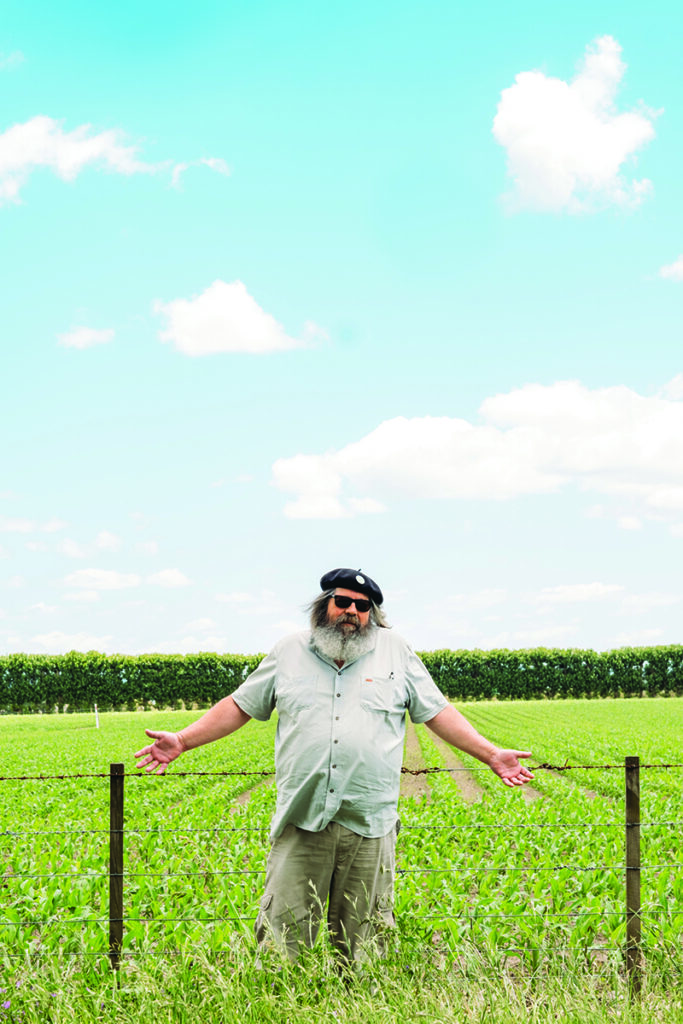
Climate change is happening whether we like it or not, so the challenge is to build resilience and security to survive in what may be a very harsh environment with limited supply chains. The best way to do that is through comprehensive land-use reform.
We certainly can’t survive on apples and milk alone, and living in today’s urban settings may become untenable for many – even if they’re not flooded by rising seas. At the same time we need to take the strain out of feeding urban conurbations that cannot feed themselves if we wish to retain sizeable and essential secondary and tertiary manufacturing industries.
So we need to facilitate the break-up of large land-holdings and encourage diversity of production as widely as practicable, while moving a significant percentage of city-dwellers into rural areas. In short, get back to the model of ‘hamlet’ communities able to self-sustain themselves on relatively small acreage.
In Aotearoa we are blessed with having a small population in relation to arable, productive land, so unlike most other countries this should not be as hard a task as it seems. Moreover if we start this move now, with buy-in from all parties on the need to do it, there is no reason we cannot have the best of ‘both’ worlds for as long as present civilisation lasts. Not everyone needs to be a ‘farmer’, while those new to farming tasks can benefit from the expertise of the skilled hands.
As a first step, apart from re-education about the need to drive it, land-use and planning rules must be changed or relaxed so that for example a ‘productive unit’ is not measured in terms of economic output, but per-person sustainability; and subdivision into ‘farm park’ hamlets is not only easier but actively encouraged.
To do this properly we must stop thinking in terms of ‘my’ land, and start thinking of it as ‘ours’. And we have to stop worrying about price and markets and everything else that ‘relies’ on money, and start thinking about how many people growing what sort of things can a given area sustain.
At base we have to stop looking at the future and fearing (or worse, ignoring) it, and instead immediately start making the adjustments to accommodate change. Because, simply, the coming alternative is chaos.
DAVID TRUBRIDGE – Pernicious entitlement

All reports are telling us that the global response to the climate crisis is critically slow and inadequate. Why?
It is easy to blame powerful and greedy multinationals, or weak politicians. But ultimately it all comes back to us. If there is one radical change that I think we need to make, it is to our sense of entitlement.
That entitlement is a core part of the world view that we have been born into here. It is a set of values that we have imbibed through our culture, our society. The pernicious thing about entitlement is that we see it as both a norm and a right. Like the goldfish that thinks the whole world is water.
But entitlement is not the norm. It formed in Europe and spread around the world, a virus carried in the fleets of the colonisers. It has become the core message of consumerism: you are entitled to look beautiful, to have a new car, to holiday in Europe… “Because you are special.”
You are no more or less special than any other life form on this planet. Why is the African child scavenging rubbish on landfill not special? Why is she not entitled to an overseas holiday? What makes you different? Because if all 8 billion people consume as we do what would happen to the planet? Our privileges only come at the expense of others’ loss.
Entitlement is confined to wealthy colonised countries. It does not exist in indigenous societies or poor countries. It is in the poisoned Kool Aid we have drunk. Entitlement does not consider consequences.
Twenty years ago I said that if you drive your oversized vehicle down to the dairy to buy milk, someone’s home in Bangladesh will be flooded – as a consequence. Today it will be someone in Haumoana – but you still do it! Because we refuse to give up our entitlement. Because we blindly refuse to accept consequences. Because we believe we are special.
It is the nature of entitlement that when you lose it you usually become nasty. We’ve seen this when entitled people thought they were losing their ‘freedom’. So the inevitable change will be violent. But the alternative of not changing is far worse.
And we can change. Today it has become socially unacceptable to say things about racism or gender that used to be more commonplace. We need to make it similarly socially unacceptable to exhibit a sense of entitlement or privilege. That will be harder because it means giving up on the many luxuries of our lives. It will happen, whatever: we can choose whether it is voluntary or forced on us.
So please consider the things that you take for granted. Ask yourself if you carry unawares an embedded sense of entitlement, like racism and patriarchy in the past? How can we change this in ourselves, and how can we help others to do so too? For the sake of life as we know it.
PAUL PAYNTER – Perpetually whining 3 year-olds
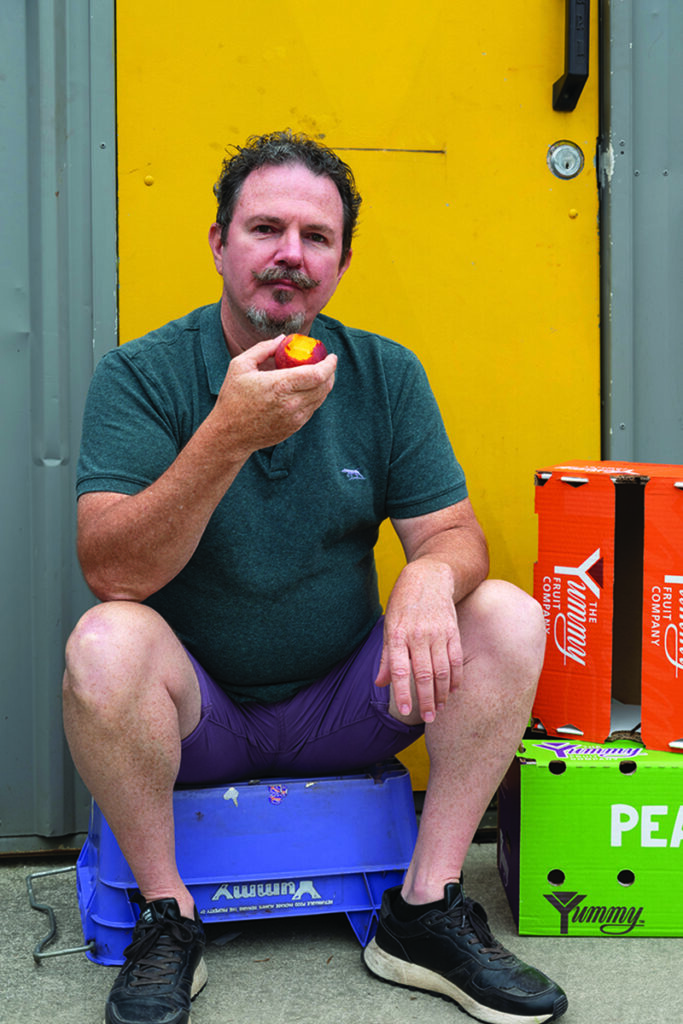
In the dark days of our serfdom, my forebears likely lived under the benevolence or tyranny of a long forgotten aristocrat. He had all the power and all the rights and we had none.
Our world has become more just and now we have a raft of ‘rights’. Increasingly we assert our demands for everything because it’s our right – a right to a warm, dry home; to nutritious and affordable food; and even to work from home.
In reality we can only have rights that a civil society can afford us and most of these are contained within the Bill of Rights Act, limited to matters of individual sovereignty like freedom of expression and association, electoral rights, etc. They do not extend to material goods or services that someone else might have to provide us.
Curiously the standards by which we judge any deprivation we may suffer keep going up. At one stage of my life I was officially homeless. As a young student I lived in an uninsulated garden shed for $40 a week. It was about 3m x 2.2m, with a low roof and about the same temperature as outside. I had a fan heater plugged into the sole powerpoint. In just 3 minutes at full power, it was the warmest student bedroom in Palmerston North, giving me a bigger budget for burgers and beer. In truth, most of us live better than our kind did 500 years ago.
I’m grateful for all the rights that we have these days but fear we’ve forgotten that they are a double-edged sword. With rights, go responsibilities. I don’t hear anyone talking about responsibilities and likely that’s because they don’t fancy them. If there isn’t a balance between rights and responsibilities systems don’t work.
For example, the difference between your right to drive and your responsibility not to be drunk or reckless is largely reflected in the road toll.
So every time you hear people demanding rights, ask them what responsibilities they’ll take on to balance these out. The recent clamour for 16 year olds to vote is a good example. If they want to be granted the rights of an adult, perhaps they should also be treated as an adult in the criminal justice system when they ram-raid a liquor store, or supply your 16 year-old with methamphetamine.
I fear we are creating a desperately entitled generation who think a cushy existence is theirs by right and who have little comprehension of taking some responsibility for their lives.
Taking responsibility is infinitely more valuable than asserting rights. To toil away and create a better world for yourself and those you love is about the most purposeful and satisfying thing you can do with your life. If that message isn’t reasserted we’re breeding a generation who will be perpetually whining 3 year-olds.
In the realm of rights and responsibilities – we need a reset.
KATIE NIMON – Hawke’s Bay needs a boom

The kind of boom where people move here to be a part of it.
Where businesses invest in the region to get on the bandwagon. You get that by investing in industry and infrastructure, and even better if it’s new. New industry means new skills. New infrastructure means new assets. It’s a pretty simple system.
Let’s use green hydrogen generation as an example. It’s not just design, build, and maintenance of the windmill or solar farm for generation, it’s the storage, the electrolysis, and the pipelines. While the infrastructure is only built once, it’s managed forever, and it’s an asset that continues to supply energy to the grid, jobs to the market, and money to the economy.
Innovation in industry and infrastructure requires new skills. Sure, at first, it’s attracting talent from overseas; talent that will inspire kids into study, trades, and careers. After a while, it becomes part of the culture of a region, and a rite of passage for its people.
Countries and regions that build, create, innovate, and enhance, unlock economic growth at a rate of knots, and enable the delivery of free or subsidized services – like Norway’s tertiary education system. Instead of losing our best and brightest to big cities or big countries, I want to see this region attract and grow skills. Attract investment. Attract innovation.
We need to cultivate an environment where we welcome the establishment of new businesses, or the pilot of new technology.
The problem is, we don’t want things to change. But change is progress.
Just imagine: A new film industry in Hawke’s Bay that will attract skills, inspire generations, and boost the economy. If only we could get past the increased traffic.
Instead of closing the door to growth, we should look at the opportunities that go with it. I want to see a boom. We’re an ambitious region, let’s get aspirational.

The diversity of opinion is both amazing and concerning.
I found it telling that of the five voices for ‘new directions’ the author could find a lone female voice for us to consider.
Bang on Paul Paynter.
My reaction to this article is the same as Sax Dearing and Nita!
The word ‘boom’ is commonly followed by ‘bust’ and it’s probably best not to talk about a boom and hydrogen in the same sentence…