

[As published in March/April BayBuzz magazine.]
Anyone in the wine industry right now, and anyone looking at the local wine industry right now, when asked what they can do to get ahead, would be forgiven for conjuring up the famous scene from F.R.I.E.N.D.S where Ross starts screaming at Chandler and Rachael to “Pivot! Pivotttttt!!!” while struggling to get his new couch up an impossibly angular staircase.
It’s been a brutal couple of post-Covid years. Traditional markets like local hospitality and wine retail are shrinking faster than the western world’s birthrate, local distributors are shedding their agencies, supermarkets are delisting brands with alarming frequency and Trumpy tariffs, alongside a dusty international economy, are making domestic business and export prospects a lot trickier than ever before. Large crops have led to an oversupply, with around 20%, or 100,000 tonnes of grapes being left unharvested across NZ in 2025, and it looks like 2026 will be the same. The blame is being laid squarely at the cost-of-living crisis, and the drinking habits of younger generations. Those pesky kids!
Yet for every industry story touting that wine is struggling because millennials and GenZ’s are either not engaging with wine in its traditional form, not engaging with wine until much later or not at all, there are articles saying that it’s older drinkers drinking less that’s causing the slump. And that the younger markets are in fact drinking and spending more – but they’re doing it very differently. Both could be true.
Being firmly GenX, I’m guilty of having many a baffled grizzle with chums over the fact that here in Godzone, when we were in our teens and early 20s, we had to learn how to drink wine because there wasn’t much else on offer. Just beer, sweet cider, spirits or (and the memories are visceral) Stoli Ruskis and Purple Goannas. We started out sneakily sipping our parents’ sherry or taking $8 bottles of ‘port’ to parties. We squinted our way through casks of Cooks Chasseur, Blenheimer and Liebestraum. Swigged Bernadingdong, Marque Vue, or Lindizzle if we were feeling fancy. Then you simply had to develop a taste for the classic whites and reds if you wanted to be taken semi-seriously at dinner parties.
Today wine is competing against beverages and packages that cater for every taste and trend. Think seltzers, RTDs, various ‘hard’ waters and craft brews. Beverages boasting No or Low alcohol, carbs, chemicals, flavour or joy being sold in pouches, tubes, cans, balls and boxes. Yet from what I’m seeing, younger drinkers are still flocking to cellar doors, wine and food festivals and signing up for wine education events. They’re looking for wallet-friendly authenticity, experiences, and brands they can relate to. Mature drinkers are looking for the same things.
So, with all that stacked against them, I asked our local wine producers how they were dealing with this tricky winescape. What were they doing to keep customers sipping? Were they collaborating with others, creating new products or experimenting with different packaging? Perhaps they’re changing things up (or down) in the cellar door or getting more involved with festivals, trade shows or looking for new markets? I asked about anything and everything they’re doing to keep ahead of the curve OR if survival means they’re simply sticking to the status quo.
Here are just a few of the responses.
Ollie Powrie – Chateau Garage & Albariño Brothers
“We’re having fun while focusing on every opportunity to enhance our quality and produce unique wines that tell a story. So much care from vineyard to winemaking to bottling and hand labelling etc. leads to customer experiences which are fun and exciting. We’re innovating with wine styles by using clay and ceramic vessels and avoiding the use of lots of oak. We’re also resisting the urge to make more wine which then just always seems to put pressure on reducing the price.
“On the Albariño Brothers front, I guess we’ve obviously backed what is an up and coming variety which we think has huge potential and from a branding point of view we really wanted to stand out in a noisy and boring environment. Focusing solely on one variety has meant we’ve had great success with premium restaurants, bars and retailers.”
Then, in typical self-deprecating fashion, Ollie opted to stop writing for fear he was “coming across like a real dick”. Which we all know, he is not.
John Loughlin Askerne Wines
“At Askerne, we’ve always focussed on having a broad range of wines that makes us interesting and relevant to a range of wine consumers in a broad range of market channels. We’re also focussed on interacting with our customers to give them experiences while selling them our wines. We’ve introduced four new wines – Sérieux Rosé (mainly Mourvèdre and Malbec), Fleurty Rosé (with Gewürztraminer for florals), a sparkling Brut and a CSM (Carmenere, Syrah, Mourvedre blend).
We’ve also expanded our cellar door and tasting area and will be further extending our verandah to provide a larger undercover tasting area. We also introduced wine flights as a ‘self-guided’ tasting experience and built a cycle track up from the cycle trail at the rear of our property.”
Anonymous local wine sales rep
“I’ve worked for high-profile national wine brands and distributors across cellar doors, DTC (direct to consumer businesses) and in sales for ten years plus, and the hustle is real! I feel like wine in NZ peaked between 2000-2022. Post lockdown, many people looked at their consumption and the traction has never been the same. Regionally, wine clubs I present to are getting smaller and the members are older. The few newbies who do attend, don’t spend much. Overall average spend from wine clubs has declined. I’ve always gone outside the box to find customers through corporate, retirement villages, food shows, women’s events, A & P shows, harvest festivals, live music festivals, marathon events and pop-up cellar door experiences. It’s hard work to be “ON” for these events, and we need to be memorable and stand out. We garner email details from everyone we speak with to build our database and send mailchimp offers a few times each year. Fortunately, [the winery I work for currently] is a very well-established brand that’s produced excellent quality, award-winning wines for over 30 years and offers a much-loved cellar door and restaurant for the more casual consumer.”
Alex Hendry from Saorsa
“In a nutshell although times right now are hard for all, our aim has been to use this as a time to reflect upon our core wine varietals and what we initially set out to achieve.
Not quite scaling back, but yet not expanding right now. I think to survive the current economic chaos in a world with a million 2-minute brands, it’s time to focus on what means the most to us and our loyal customers no matter the size. Focusing on our vineyards and grower relationships, and making sure we make the best every year rather than expansion or volume. Taking our time and not rushing wines to compromise their potential. We’ve been working on a small, passion project wine, not to do with current trends or the economic situation, but rather a dogmatic belief that Hawke’s Bay has real potential for a cool climate Grenache revolution!”
Jules van Costello from KnownUnknown Wines
“While we’re technically not a Hawke’s Bay company, we buy most of our fruit from the region and we’re quadrupling the one part of our business that is thriving: vermouth, aperitifs and other grape-based products such as bottled negronis.
Our ‘core’ aperitif is Bloody Vermouth, a new-world take on the classic ‘Rosso’ or Sweet Vermouth. The base wine is a blend of Organic Syrah and Cab Franc from Bridge Pa and we’re now on our 4th 200l batch.
I love making them because it’s a little bit more creative than making wine, in a similar way to brewing or distilling as you’re combining a base product with other flavours and components.
I also really love drinking them. From a more pragmatic perspective, they’re good for business and we’re quite good at it. Ours was the highest scoring vermouth in the NZ Spirits Awards. It also has a more premium price point with less price competition than wine… with some retailers putting out $90 and $100 dozens it’s pretty hard selling fun, fresh, lo-fi wine in the $25-$30 price category.
Packaging and excise is a lot more expensive but even with these, the % return on vermouth is a lot more. A small-batch $25 wine costs me about $9 to make, we sell to the trade at $15.50 ex gst before any discounts, which is around 45% GP.
Likewise, there’s a lot of growth potential for NZ vermouth domestically, which is sadly not true for wine.
Our cheapest bottle of Vermouth is $45 and costs me about $14.50 to make, we sell this for $28 and we don’t have to discount. That gives us at least 50% GP. Margin on bulk vermouth is even better.
When I put the call out to local wineries to find out how they were adapting to the changing consumer winescape, one response warranted a more in-depth explanation.
Dan Brennan, Decibel Wines
“To answer this, we have to fully understand why things are so tricky and how we got here. Yes, the NZ economy and the NZ dollar is a cork bobbing in the ocean of the big players around the world. However, our government and NZWG do nothing to help…
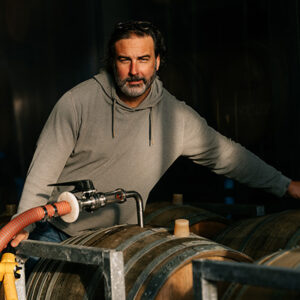
“Firstly, New Zealand wines and any of our entities NZWG, MPI, Customs etc. have forced us into a ‘one trick pony’ scenario. For so many years, they’ve only focused on [Marlborough Sauvignon Blanc] and those massive brands. While many wine regions around the world are struggling and have taken a hit in the past few years, it’s mostly a case of missed opportunities for us.
“The world wants more wine from NZ. They just don’t want the same old MSB. They want interesting wines with a story, different varieties, styles, organic and natural from different regions. At last year’s Pinot Noir Conference in Christchurch, New York Times wine critic Eric Asimov stated ‘where have you been? We want to know your wines, but you simply aren’t showing them to us.’ I can say for sure, that I personally have done everything I can to get the message out about different wine styles from NZ, spending as much time and money in export markets, particularly in the EU and North America, as any winemaker in NZ.
“As a comparison, we’re not so different than Italy for what we offer. That is, a wide range of wines and stories. But if Italy focused only on Pinot Grigio or Prosecco they’d be in the same position. Instead, they support their industry and [its] many differences. That’s why there are so many success stories from Italian wines. There is so much more to discover.
“What exasperates is the way NZ wine is treated within NZ. Between ever-rising government sanctions like excise tax, coupled with no protective taxes against cheap imports, it’s hopeless. I can’t believe there is WET [wine equalisation tax] in Oz and we do nothing in response. If even small measures were taken to protect our industry from cheap plonk flooding from overseas, our wine glut and economic woes would disappear in months.
“Not only that, the consumer would benefit tremendously with the amount of high quality NZ reds that are struggling to get sold at the moment. Our industry isn’t supported by the government. Instead, we’re told we’re sinners and should pay more excise every year. We should be investing in our culture, not charging it more money. At the very least, we should be taking some of that excise money and educating people on NZ Wine. They should be paying you to do a Thirsty Work* episode every week!
“The solution therefore, is to work tirelessly at exports. No wine business in NZ can survive as a standalone entity without significant exports. By ‘standalone’ I mean a winery that’s independent, not supported by some sort of trust or deep pocketed investor. It’s simply impossible to sell domestically and survive. There’s nothing about the NZ economy, culture, population size, tourism numbers and countless other factors that’ll change this anytime soon.
“Decibel is working tirelessly to engage new wine drinkers here and abroad. The Outfield Festival is a perfect example. So many attendees told us they love good wine and want to know more about it, but they feel alienated by snobbery and old brands who ignore them in favour of older, wealthier consumers. We forget that wine is for the people! It takes a whole community to produce it and it’s meant to be enjoyed by the community with good food.
“We don’t do enough of that messaging, (which frankly is also more responsible), by showing our wines with our excellent and evolving local cuisine. And I don’t just mean 5-star restaurants. I mean showing our wines with local food on the streets. Is it such a shock that a place like Hello Beasty in Auckland is always packed every night it’s open? That’s casual and fun dining at its best. No white tablecloths in there!
“So, I’m looking to work with casual restaurants around the world. We’ll do more events with live music and street food. We make sure Decibel is accessible and inclusive to all. Surprisingly that space seems to be wide open. For instance, our wine keg business is increasing every month. It’s a more sustainable and affordable way to reach the consumer, and everyone down the chain sees more margin in it.
“Whenever I visit a market I insist on doing a local wine tasting, even if it’s just a couple of hours at a small wine shop. It keeps my finger on the pulse. It keeps me in touch with the consumer. Of course, sometimes it can be at a swanky country club or high-end restaurant. But often it’s at a neighbourhood restaurant or retailer. We need to continue to evolve and try new things domestically and internationally. In 2026 I’ll be overseas more than ever preaching about great New Zealand Wine.
“With all the changes out there, there’s also lots of opportunity. Markets around the world are opening up and it can be scary to try a new market out, but you have to take that leap. You have to grow your team so that you’re not doing everything on your own. So that you can focus on growth. It’s times like these when you need to be more passionate than ever, spread that energy, raise the quality of your wines and raise your game!
Over and out.”
*Thirsty Work was a wine tv series produced by Yvonne Lorkin on FoodTV and ThreeNow.
Yvonne Lorkin is a wine writer, the Co-Founder and CTO of WineFriend (NZ’s No.1 personalised wine subscription service) and she’s a proud, born and bred Hawkesbaylien.
winefriend.co.nz or yvonnelorkin.com

We do our best locally to make inroads into HB wines with a cellar visit every Sunday – but we have noticed over the years that the number of cellar doors have reduced markedly – there was (where Decibel is now) an outlet that focused on all the wineries without cellar doors – perhaps that could start up again to let us taste those smaller winery offerings at a set place