

“Errant deer’s runway chase ends in tragedy” was the headline in Hawke’s Bay Today on May 10.
Shooting a runaway deer on the airport runway is not a tragedy, it is a good start.
It’s a good start for two reasons: the first is public safety, the second is our devastated indigenous vegetation.
This dead deer is the most obvious and recent sign of the increasing feral deer population across Hawke’s Bay. Unfortunately, the problem is set to get worse. Feral deer numbers in Hawke’s Bay have skyrocketed in the past few years, and feral deer can be found on virtually every farm in the Bay.
So more accidents are likely to happen. Let’s hope they don’t happen on the scale of the United States, where every year more than two million people hit deer with vehicles. Records show at least 59,000 human injuries and 440 human fatalities in the US because of feral deer.
Deer fencing along major roads is now common in the US. But let’s not spend our money on deer fences along Hawke’s Bay Roads. Let’s put them around catchments and groups of farms so that the fences go where they can be of the most use – excluding feral deer from our pastoral landscapes.
All of Hawke’s Bay’s natural landscapes – those areas which still remain in indigenous vegetation – are at threat from deer and goats.
We are losing species rapidly; the collapse of the kakabeak population in the last 10 years is the canary in the mine for the rest of the ecosystems.
Compared to other areas of New Zealand, Hawke’s Bay has a much shorter species list; that’s because our landscapes have been grazed for a long time and also modified by fire and clearance. In some parts of Hawke’s Bay, for example, the Eastern Hawke’s Bay ecological district, which runs from Cape Kidnappers down to Cape Turnagain, encompassing all the coastal hill country, only about 5% of the landscape is still covered in bush remnants.
That puts our landscapes into the most threatened categories compared with other parts of the country. More remains in areas like the Wairoa district, but this is mostly revegetating kanuka and manuka.
So, we don’t have much bush left, and what is left is hugely threatened by feral deer and goats. Deer eat preferentially, choosing the most palatable species first, so they progressively remove species by species. Goats are less fussy.
The following series of photos shows the cumulative effects of deer browsing in the past few years. This covenanted bush in Central Hawke’s Bay has now been deer fenced. Photos: Troy Duncan, QEII National Trust
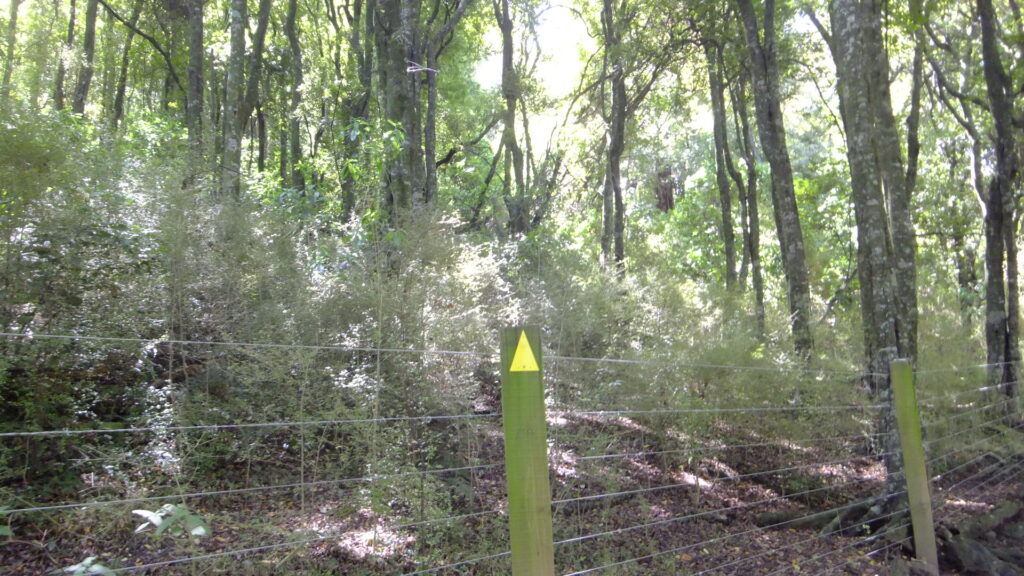


The numbers of deer and goats have increased exponentially in the past 20 years, so that now herds of 30 and 40 deer are commonly found in our pastoral landscapes.
Any plantings – past, current or future – are endangered without feral deer and goat control. And we are fast losing any remaining understorey in our forests.
The only fully functioning forests in Hawke’s Bay are where deer fencing is already in place. Conservation without deer fencing is now impossible, and those protected areas with only sheep and cattle fencing are now almost worthless ecologically.
We need to spend our conservation dollars on enduring solutions, and we need to look after the remaining natural habitats we have.
In the last 20 years conservation funding has moved significantly towards predator control and away from habitat protection. But predator control without habitat improvement is a huge waste of money. Predator Free 2050 has diverted a huge amount of money away from the thing that should happen first: habitat protection.
Without bush remnants for example, and without fully functioning forests, we don’t have safe refuges for our native birds and animals to live in.
We need to come up with a way to support landowners on private land to do the best they can with the remaining natural landscapes they have, and do that in a way which provides enduring results.
For many years Hawke’s Bay’s work on controlling possums set the standard for the rest of the country. Organised by the Hawke’s Bay Regional Council, farmers in small groups worked to control possums in their districts; many employing contractors to keep numbers of possums down. This was very successful when everyone in the group worked together, and this could again be a good model for part of the work needed to control the tricky problem of deer and goats.
A limited amount of top up deer fencing has begun around covenants by the QEII National Trust, helped also by the Regional Council. But current financial constraints limit what is able to be done.
My idea is to encourage landowners to work together in groups to top up deer fence their boundaries and keep deer and goats out of their farms. That way, the deer fencing could go on ridgelines and around catchments so that tricky sites to fence like streams, are minimised.
And when farmers – and catchment groups – know that all the deer are removed, they are in a much better position to invest in repairing landscapes with trees.
So instead of fencing smaller areas, and paying a high cost per hectare for protection, the money could instead have a much wider impact across a larger landscape. All the farmers in an area would have to agree to do this, but the benefits would be enormous.
By excluding deer, they would ensure their crops weren’t eaten; they would know their plantings weren’t being eaten, and they would know their natural bush remnants would be able to recover. They would know that their landscapes were able to sequester more carbon, and they would be much more likely to attract funding to help protect their natural landscapes too.
Funding agencies would be much more confident about putting public money into a landscape protected from deer damage.
If we don’t think at a landscape scale to solve the deer and goat problem, then we will lose our bush remnants at a faster and faster rate. And any plantings will be compromised.
Helping Hawke’s Bay landowners work together to solve the feral deer and goat problem is an enduring solution and a much better use of conservation money than what is happening now.
Marie Taylor, a Queen’s Service Medal recipient, operates Plant Hawke’s Bay, a nursery that grows native plants, and is newly elected to the board of QEII National Trust.

Wouldn’t it be feasible to have paid dear cullers as they did in the 50s. Using the meat…isn’t that a sustainable option. Just a question.
There must be plenty of hunters who would be happy to take out deer and especially goats for a targeted fee per animal. Any meat could be used for food banks – but just getting rid of these pests would be the major gain – both are a plague on the bush and, similarly to possums, destroy our native habitats.
Having a target for possums, stoats, weasels and ferrets would be worthwhile as well!
In my line of work, controlling possums I see first hand the damage goats and deer do to the bush. It is really sad to see. These pests need to be more front and center of any conservation strategy.
Marie’s idea of catchment scale deer fencing makes a lot of sense as it would deliver a lot more community and environmental good than small scale projects. There are voluntary deer culling groups working in Hawke’s Bay such as Hunt for Good who distribute venison to food banks.
I m very glad to read this article as it raises awareness if this problem. On a cycling trip to Mahia I saw goats crossing the road and it wasen t just one or two,but at least 10 very large animals. I was really shocked to see how well they are doing out there in our landscape eating everything in their way. It s sad.
I was also heartened to read this article, raising awareness of the deer problem.
Unfortunately, deer hunters tend to shoot only what they can carry out leaving the rest to continue their destruction.