

[As published in March/April 2026 BayBuzz magazine.]
Have you noticed that wellness lately feels … weirdly stressful?
Cold plunges at dawn. Seventeen supplements before breakfast. Sleep scores. Glucose monitors. Hormones optimised. Podcasts promising you’ll live to 130 if you just try hard enough. Somewhere along the way, wellness stopped sounding like wellbeing and started sounding like a performance review.
The vibe isn’t feel good. It’s outperform ageing.
And honestly? It’s exhausting just watching.
Bio-hacking and bro science
The loudest version of longevity culture isn’t really about health. It’s about invincibility – outsmarting biology, hacking mortality, and, ideally, selling the protocol along the way. Wellness as conquest.
The message is subtle but clear: optimise hard enough and you might outrun time itself.
At the same time, we’re watching a broader reckoning play out – one where long-protected power structures are being questioned, where authority once accepted without scrutiny is suddenly under the spotlight, and where the myth of the untouchable powerful man is starting to crack. Turns out unchecked power doesn’t always age well either.
While some men chase immortality through optimisation and control, women have historically been handed a different assignment: be tireless. Be adaptable. Be everything for everyone else – just don’t take up too much space while you do it. No wonder we’re tired.
It feels like more than individuals being called out. It feels like the entire definition of success is being renegotiated – which raises a bigger question: if the old model isn’t working, what does success look like now?
Success doesn’t have to hurt
Hustle culture sold us a shiny lie: that exhaustion equals importance.
If you’re busy, you’re valuable. If you’re stressed, you’re ambitious. If you’re running on caffeine and adrenaline, you must be doing something right.
Women became experts at performing competently under pressure. We juggle, absorb, smooth things over – often while quietly running on empty. But burnout isn’t proof of success. It’s a nervous system waving a very polite white flag.
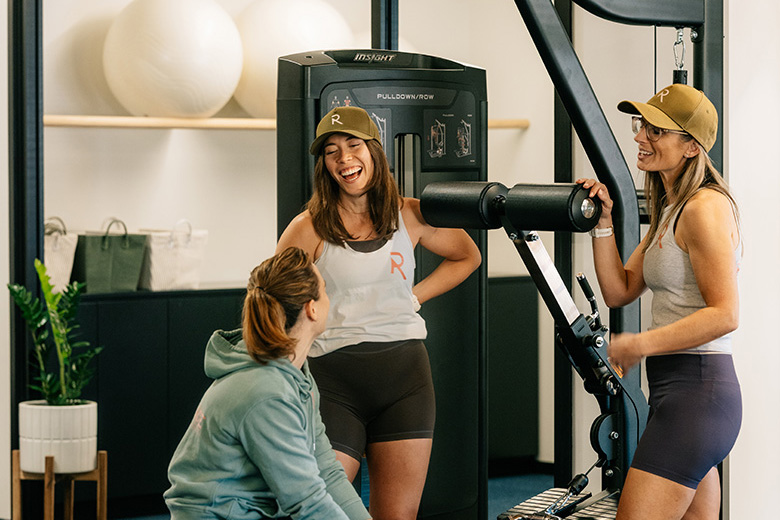
I’ve been learning this in real time. Opening a new women’s strength studio this year has been one of the most meaningful things I’ve ever done – and also, at times, an absolute grind. When you love what you’re building, it’s easy to justify every extra hour. There were weeks where I realised I was coaching women to prioritise themselves while eating dinner standing up at 9pm and promising myself I’d rest ‘after launch’.
The work is deeply purposeful – but purpose doesn’t automatically protect you from imbalance.
Reading Grounded Success by Kemi Nekvapil landed at exactly the right moment. Her core idea – success without self-abandonment – reframed everything for me. Success that doesn’t require overriding your body or betraying your values just to prove your worth.
Hawke’s Bay business and strategy coach Rebecca Stone calls this a rebellious act in itself: defining success on your own terms rather than inheriting someone else’s model. In her view, self-love isn’t soft – it’s strategic. It’s how you build something sustainable instead of something that burns you out.
For a recovering people-pleaser building something she cares deeply about, that feels less like a nice idea and more like a survival strategy
You don’t have to earn your rest
Many of us grew up believing rest was a reward. You get it after the project. After the launch. After the kids are older. After everything is finally sorted – which, spoiler alert, never actually happens.
Somewhere along the line we absorbed the idea that productivity buys permission to pause.
But your body isn’t waiting for managerial approval. Fatigue isn’t weakness; it’s data. Hormonal shifts aren’t inconveniences; they’re biology. Working with your body instead of against it isn’t indulgent – it’s intelligent.
This is the lesson I’m actively learning now. If I want this business – this dream – to grow sustainably, then rest isn’t optional. I can’t lead from depletion and expect longevity, personally or professionally. The irony isn’t lost on me that building a space for women to thrive requires me to actually practise what I preach.
Choosing rest isn’t giving up. It’s deciding you plan to be here for the long game.
Success shouldn’t cost you yourself
Traditional power is loud. It dominates the room. It prizes certainty, speed and control. It often mistakes confidence for competence – and volume for authority.
But as public trust shifts and old models wobble, domination-based leadership is beginning to look less like strength and more like fragility with good marketing.
Women have often been told the solution is simple: play the same game. Toughen up. Speak louder. Compete harder.
But what if power doesn’t require domination? What if it looks like steadiness instead – clear boundaries, collaboration, leadership without ego? Traits historically dismissed as ‘soft’ – empathy, patience, emotional intelligence, long-term thinking – suddenly look like exactly what this moment needs.
Strength is steadiness, not strain
We glorify strain: the grind, the 5am wake-up as moral superiority, the ‘no days off’ badge. But strain isn’t strength. It’s stress without recovery.
Real strength adapts. It builds progressively. It rests between efforts. Physiologically this is obvious – muscles grow in recovery, bones strengthen under measured load, nervous systems become resilient through balance rather than constant alarm. Yet culturally, we still expect women to live in permanent overdrive.
Stone puts it beautifully: “Strength isn’t about becoming more impressive. It’s about giving yourself permission to take up space.” In women-only training spaces, she says, the story shifts from “I’ll never be able to do that” to “If she can, maybe I can too.”
That shift is bigger than fitness. When women experience strength as steady rather than punishing, confidence stops being performative. It becomes embodied. And that changes how women show up in business, leadership, and life.
The opportunity
This cultural moment – messy, uncomfortable, headline-heavy – feels like more than scandal. It feels like an opening.
An opportunity to stop chasing success in ways that quietly erode us.
For me, the challenge moving forward isn’t working harder. It’s learning to ask for help. Trusting others to build alongside me. Letting go of the ‘not good enough’ voice that keeps trying to prove itself. Accepting imperfection. Getting comfortable being visible without trying to please everyone at once.
Turns out ‘figure it out as you go’ is less a flaw and more a surprisingly effective business strategy. Stone describes this as the rebellious side of success: choosing self-trust over self-criticism, and recognising that self-love isn’t separate from achievement – it’s what makes achievement sustainable.
Maybe that’s the bigger shift happening right now – moving from proving to trusting, from grinding to grounding. Building strength that supports you rather than consumes you. Because the real opportunity here isn’t to reject ambition. It’s to redefine it.
Success that is steady. Success that is sustainable. Success that doesn’t cost you yourself.
And honestly? That feels like the strongest kind of power there is.
Janine Couchman is a personal trainer and fitness coach specialising in strength training women of all ages and stages. She is founder of The Resistance in Havelock North – a gym designed specifically for women and shaped around real bodies, real lives, real challenges and real aspirations. She can be found at theresistance.co.nz