
[As published in July/August 2026 BayBuzz magazine.]
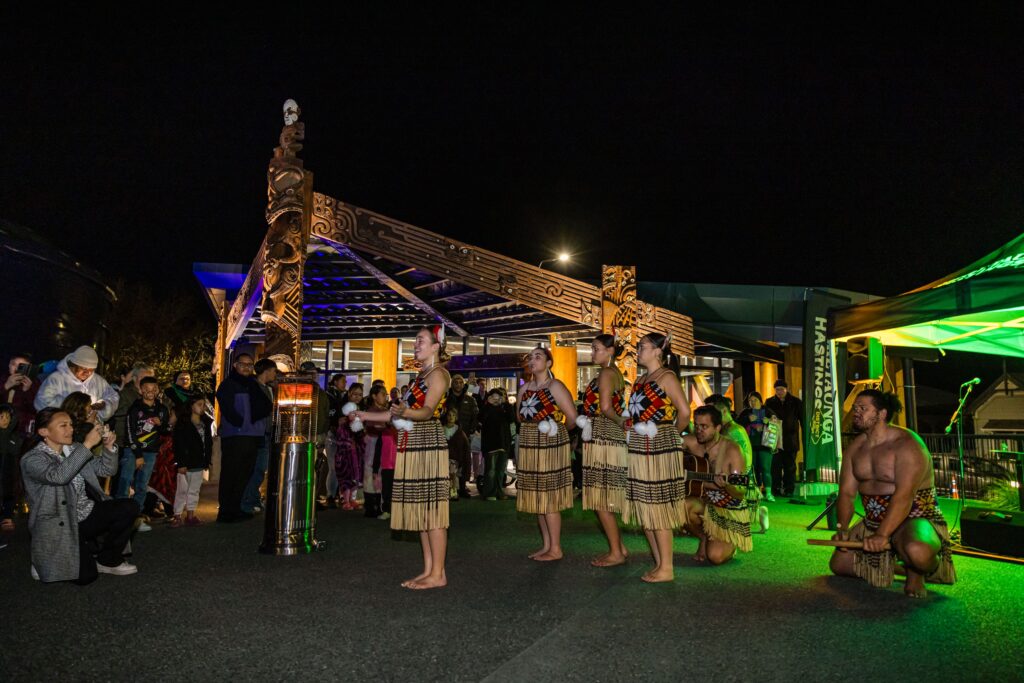
I first met Te Rangi Huata in 2001 when I was a stall-holder and manager of the Farmers’ Market. Te Rangi was instrumental in the national rekindling of the neglected flame of Matariki. He suggested that the Farmers’ Market was a good place to celebrate the event.
So with the backing of the stall-holders and financial support from Ngāti Kahungunu Iwi Inc we staged a Matariki festival. As well as the usual market offerings, we sold hot food, as did local iwi food providers. Te Rangi organised cultural performances. The event was fun, wholesome and relevant to Aotearoa/New Zealand. So good in fact that we repeated the festival the following year.
I sat down with Te Rangi recently to discuss the growth of Matariki celebrations over the last 25 years, its five years with national holiday status, and to ask him how I, as a Welsh/Irish, atheist, pakeha, could partake in the festival.
During our discussion he confirmed the core values of the festival and gave examples of how various iwi celebrate in different ways. With his humility, sharp mind and worldliness he has the big picture in view and the patience to let it develop.
He said that traditions evolve according to need. There’s an idea that Matariki should or could become the time of year for home-comings, for unveilings, for significant birthdays and milestones to be celebrated over the holiday weekend, thus giving everyone the certainty of dates and time to plan well ahead, to come together and celebrate in their own way.
Matariki meal … Make your own
Of the nine stars in the tiny eyes constellation about half represent food. From the rivers, the seas, the land, the sky, and the wind. It’s a time of year, and now, thanks to the public holiday, a short winter break that lends itself to a shared meal.
On-and-off over the last ten years I have hosted gatherings of family and friends to mark Matariki. Encouraging people to bring a stew or a curry to share, freshly baked focaccia, herbs and winter greens from their garden, the last of the feijoa chutney to foist on unsuspecting fellow diners. We light the brazier and cook something over charcoal. With warming fare and fire, we are cognisant of the three main themes of Matariki: remembrance, connection and looking forward to the future.
We will do something similar this year with friends, family, fire, food. In recent years we’ve partially curated the pot-luck in order to reduce awkward duplication and a surfeit of rice salad. We’ve added to our emerging tradition a quick ringaround to check who’s coming, and a messenger thread to keep track of who’s bringing what.
Alongside Matariki plans on the homefront, I am cooking a Matariki Feast at Unison Vineyard for paying diners. Menu planning has given me pause for thought: not just about what to cook, where to buy the duck and how to represent the star Pōhutukawa in the dessert, but also whether I have any right to serve a Matariki feast. I did stop to consider whether I could “do the right thing in the right way”.
That lack of confidence and trepidation at doing the wrong thing is at the heart of the issue. It’s a feeling that is no-doubt shared by many. It’s a similar nervousness I would have about unknown etiquette in other social or cultural circumstances (I’m sure that’s why Charlie Windsor hasn’t invited me for tea).
Bolstered by reconnection to an old friend in Te Rangi Huata, I am throwing my hat into the ring. Unlike dried out turkey and tissue-paper hats, the festivities of Matariki feel right to me. Matariki, Pleiades, Subaru, Seven Sisters, or Messier 45, however it’s called it’s real. A mere four hundred odd light years away, it has captured the imagination of peoples around the world. Traditions have and will continue to develop. My granddaughters sing about the stars of Matariki to the tune of the Macarena (complete with actions). Cultural fusion? Whatever it is, adaptation and inclusivity are key.
This year’s Matariki theme is Matariki Herenga Waka, an invitation to make it our own. Wherever we come from we’re all included. Matariki is for all of us.
That’s what I’m embracing. It rings true, it fits well at this time of year, it gives us an opportunity to acknowledge kinship, remembrance and renewal. It provides a little relief from the hibernation of Hawke’s Bay.
I encourage you to make Matariki your own too. Engage with the country’s unique and authentic festival. Rather than the mid-winter brussel sprout party, make it real and keep it real. Use existing family traditions or develop new ones.
Here’s my Unison menu. It will be served family style to honour the season, the festival and the joy of togetherness. I envisage diners passing food to each other, sharing, discussing, having fun, accompanied by moments of contemplation, decent wine and maybe a few songs.
Menu
On toast – smoked eel with horseradish dressing and chicken liver pate with pickled green tomatoes
Greenlip mussel and smoked kahawai in a saffron and fish broth
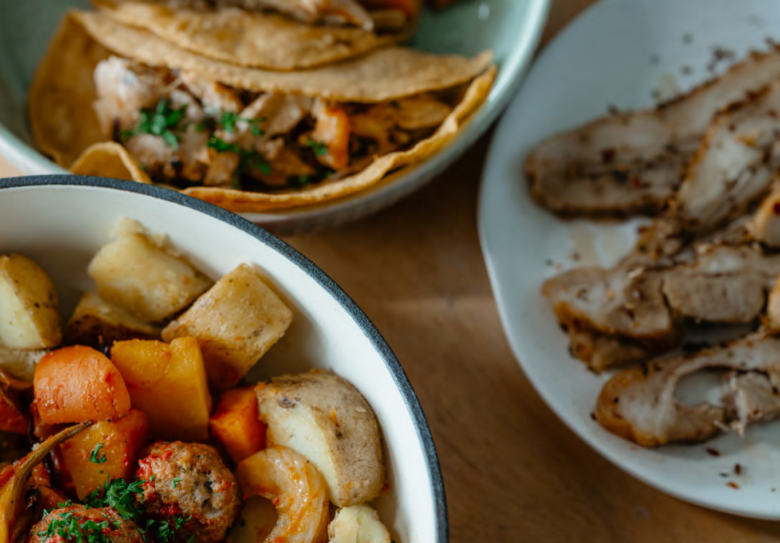
Roast chicken tacos – all from Hawke’s Bay
Slow-roasted lamb meatballs with root vegetable mash – think shepherds pie
Duck ragu, potato and kumara lasagne – from the air (the duck)
Pork belly with a manuka honey crabapple glaze, fennel pollen (from the wind)
Pear and apple tart – Hawke’s Bay staples
Ian Thomas is a chef and caterer specialising in paella. He cooks lunches and functions at Unison Vineyard. paellaagogo.com
To learn more about Matariki events across the region, go here.