


[As published n March/April BayBuzz magazine.]
Last year, New Zealand came top of the world’s developed countries for all the wrong reasons, recording the largest contraction of GDP. One local media outlet used the term ‘GDP-ocalypse’ to describe the 2 percent shrink in our economy that happened in 2024. Our economy has been doing it tough.
Business confidence has been increasing since the middle of last year, off the back of cuts to the official cash rate. But with the new year ticking over, confidence has dropped back from the highs of last year. The ANZ Business Outlook for January says the confidence score is “perhaps reality biting as it becomes clear that falling interest rates over the second half of last year will take time to work their magic. That’s not surprising, and the level of confidence and activity expectations remains very healthy, despite the pullback to start the year.”
In this article we gather views from business leaders across Hawke’s Bay, about what they think 2025 will deliver to our economy. But first, let’s start with a view from an economist.
Economist’s view
Rob Heyes, Principal Consultant with Infometrics says that Hawke’s Bay’s economy prospered during the pandemic, but started to weaken in 2023 in the aftermath of Cyclone Gabrielle.
“And that’s continued through 2024 under the yoke of rising interest rates. Household budgets have been stressed by cost-of-living pressures and rising mortgage payments, leading to more cautious spending on the high street.
“Any increases in spending have been due more to rising prices than rises in spending volumes. Population growth in Hawke’s Bay has likely slowed as Kiwis continue to head overseas in droves, and the post-Covid surge in international inward migration tailed off. As the broader regional economy stuttered, employment growth weakened and is expected to remain weak throughout 2025.”
Heyes is hopeful that economic conditions will be less difficult in 2025, as mortgage rates start to fall.
“We are expecting a recovery of sorts, but the exact timing of that recovery remains uncertain. Consumer and business confidence will be key. The sooner consumers feel confident enough to start spending, and the sooner businesses feel confident enough to invest and take on new staff, the sooner the economic upturn will gather pace. However, we have enough lingering concerns about consumer spending and the labour market to suggest that the speed of the upturn, when it does get underway, will be somewhat muted.
“As is so often the case, Hawke’s Bay’s prospects will be strongly influenced by events on the global stage. Export commodity prices have been strong throughout 2024, but if the destabilising effects of the Trump administration mean the global geopolitical order crumbles this year, those better export prices might not count for much.
“Throughout 2024, we were saying ‘survive until 2025’. That still rings true, but it might still be a question of surviving rather than thriving – in the near term, at least.”
Looking further out, Heyes says jobs growth is expected to be concentrated in Hastings and Napier over the next five years with healthcare and social assistance and the horticulture and fruit growing industries expected to create by far the most jobs across the region.
Commercial property construction sector
The outlook isn’t so bright for Hawke’s Bay’s commercial property construction sector for the next two years, according to Darren Diack, Managing Director of Gemco.
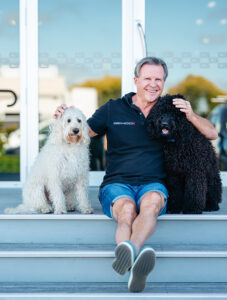
“Hawke’s Bay has had a commercial building boom for the past decade, fuelled by Covid and high inflation. Many out of town construction companies have come into the region because of this boom.
“But both local and central government have cut spending which has had a major impact on our sector (apart from Napier City Council embarking on their large Civic Precinct Project this year), and with interest rates high that means less development. We don’t see things improving until late 2026 or even into 2027.”
Diack says the downturn is linked to the political cycle, but the long lags associated with commercial construction mean that they are only having an impact now for Gemco, whereas other businesses have been struggling, such as residential construction, which hit the wall two years ago.
“There’s too many operators for the commercial construction work that does come up, resulting in a very competitive environment, which is good for the customer.
“But with more builders than work, everyone gets less, and therefore makes less, spends less and employs less.”
He says that Gemco – which has been operating for 21 years – will simply batten down the hatches and ride things out.
“We’ve got good loyal customers, great staff, and a strong reputation, so we will get our fair share of what work is around. We’ve had 10 good years. It’s just the cycle. It’s expected and it’s manageable. Good businesses will generally always survive a recession.
“We don’t think there’ll be a lot of commercial construction activity, and with that, we might see some of the out-of-towners head back to their home,” says Diack.
Local tech sector
Hamish White, CEO of telco Now, expects the coming year to be one of growth for his business.
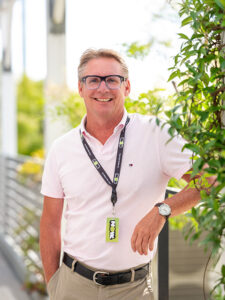
“We had quite soft growth in 2024, and that was because we were doing a lot of housekeeping and making sure that what we were about to embark on was scalable, and wasn’t going to compromise all the good things that Now is known for.
“We are ready to go now, and expect growth for 2025 to be three times what we did in 2024.”
Now is a national business, earning just 15% of revenue from its Hawke’s Bay customers. In recent years, Now has begun targeting the small to medium business market, one that White says is under served, and ready for Now’s value-based proposition.
Now winning business from its national competitors displaces domestic GDP from around New Zealand and brings it to Hawke’s Bay.
Growth in other regions leads to jobs in the Bay, says White.
“We’re a growing business, and we’ve got pretty ambitious growth aspirations. As our customer base grows, so too does the need for more staff. The silver lining in the somewhat softened employment market has been the depth of talent that has become more freely available. There was a period, pre and post Covid, where our growth was being limited by the availability of experienced people.
“We have a business plan that reflects our head count growing by more than 50% over the next five years.”
White says Now remains close to its Hawke’s Bay clients, and the cost of living crisis has seen increased price consciousness from residential customers, and a greater demand for flexibility from business customers across the country.
“This current stage in the economic cycle, which is characterised by a lack of certainty and confidence, means businesses are asking for a greater level of flexibility so that they can adapt and be more responsive to an ever shifting landscape, whether that be expansion or contraction, or both.
“Businesses have always commanded flexibility, but I think it’s become more pronounced. And we’re good at this. It’s a massive opportunity.”
As far as Now’s prospects for 2025 are concerned, White says he’s feeling good.
“Albeit subtle, it does feel like there’s an underlying shift in confidence and an eagerness to get on with it.”
Fingermark is another technology company doing great things from its Hawke’s Bay base. The business is almost completely export focussed with 95% of revenue coming from offshore, most of it from the quick service restaurant sector.
Luke Irving, founder and CEO, is optimistic about the year ahead for his business.
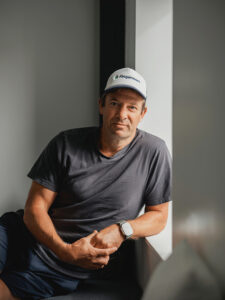
“We had a really tough year, with the US election. We had gone really hard at the US market, and although the pipeline was growing, a lot of the decisions to sign the deal didn’t come as fast as we expected.
“Since Trump got in everything has opened up. All of those deals that we would have loved to have happened at a rate of one a quarter, are now happening at once. Which is great, but now it’s about managing that.”
As for the local economy, Irving, who moved Fingermark to Hawke’s Bay in 2016, cautions about the drying up of cyclone recovery money.
“Post cyclone it has been almost a false economy. Money’s been pumped into the region, and at some point that’s going to dry up. We’ve got to make sure that we are either prepared for that, or we’re putting the money to good use that keeps it going for longer.”
Irving predicts a better, but tough year for Hawke’s Bay.
“I think it’s going to turn. We’re slowly coming off the bottom, and I think we’ll start to see traction and real acceleration, probably in early 2026.
“In terms of job numbers, employment expansion, businesses expanding, I still think everyone’s going to be a bit gun shy for another year. Unless you’re generating revenue from other areas of the world, which are starting to move again,” says Irving.
Napier Port – the canary in the coal mine
Napier Port is optimistic about the region’s economic outlook, despite ongoing global and domestic challenges, says CEO Todd Dawson.
“Our view is shaped by the steady recovery we saw in 2024, where key cargo sectors – logs, pulp, fresh produce, and cruise – continued their rebound, and strategic investments in port capacity delivered real value for customers.
“This year, we anticipate continued growth across key trade sectors, particularly in food and fibre, with promising investments in primary industries. First-quarter container volumes increased, reflecting positive momentum in exports.
“The primary sector is showing strength, supported by new season crop plantings and favourable local growing conditions. These factors highlight the resilience of Hawke’s Bay’s economy and reinforce its role in supporting New Zealand’s broader export economy.”
Dawson says global trade challenges persist – including economic uncertainty, geopolitical tensions, weather events, and supply chain disruptions.
“Napier Port remains focused on ensuring our operations, people, and systems stay dynamic and resilient. We are committed to adapting to shifting cargo flows, maintaining cost efficiency, and making strategic infrastructure investments that will support long-term growth. Our earnings guidance of $55 million to $59 million (up between 5.8% and 13.5%) reflects this balanced approach.”
Hawke’s Bay’s future depends on a strong, unified regional approach, he says.
“Water security, infrastructure investment, and strategic alignment between business and government will be crucial. Napier Port remains committed to driving economic growth, supporting our customers, and ensuring the region continues to thrive,” says Dawson.
Pipfruit
Karen Morrish, CEO of New Zealand Apples & Pears, says her sector is returning to form, with a record return.
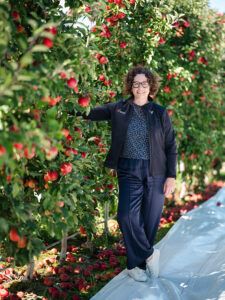
“Textbook winter and spring conditions promise a return to form for the Hawke’s Bay apple and pear industry as well as its contribution to the regional economy.
“Only two-years after Cyclone Gabrielle battered growers, our industry is projected to post an orchard gate return of $1 billion for the very first time,” she says.
The statistics, which cover the 2024 calendar year, also reveal a total economic impact of $2.5 billion to the New Zealand economy, up 27% on the previous year.
In Hawke’s Bay, this economic impact has also increased, with the sector’s overall revenue contribution rising to $1.3 billion, up from $911million in 2023. It now employs more than 7,000 people throughout Hawke’s Bay.
“We expect this upward trajectory to continue in 2025, with our annual crop estimate predicting a 10% increase in exports.
“This year’s crop is expected to deliver an excellent, clean harvest of high-value, premium-quality fruit. Ideal winter and spring conditions have delivered fruit with exceptional colour, eating and flavour. Storability is expected to be as good as ever and the crop is incredibly clean.”
Morrish says: “It is a return to form after several challenging years; however it is a bounce back, not a leap forward. The industry still has some way to go before achieving our ambitious goal of $2 billion orchard gate return by 2035.”
Growers still face increasing costs and productivity barriers, including access to capital, a lack of new and alternative pest and disease controls, and secure access to water and resources.
And while the planted area has largely returned to pre-cyclone figures, many impacted growers have taken the opportunity to replant with high-value IP varieties, and return-on-investment for these new plants is some way down the track.
“In the meantime, the sector continues to pull any and all sustainable levers we can to drive productivity and ensure a healthy operating environment that is conducive to prosperity,” she says.
Are we ready to grow again?
There’s hope that 2025 will be the year of the bounce back, and the range of views expressed here supports that notion, to an extent. As Heyes says, consumer and business confidence will be key to the recovery, when it does happen. Ready, set, grow? We hope so.
Photos by Florence Charvin
