


[As published in Summer 2025/26 BayBuzz magazine.]
If there’s a word that sums up the environment faced by Hawke’s Bay primary producers, it’s uncertainty. To find out what’s standing in the way of long term prosperity for the sectors that are among our region’s biggest economic drivers, read on.
Shiver me timbers
Timber processor Pan Pac Forest Products has almost fully recovered from the effects of Cyclone Gabrielle and is operating at 110% capacity, says Managing Director Tony Clifford.
“Our team has done a phenomenal job, selling everything that we can make.”
While that might sound good, it comes with a heavy caveat. Prices are low in key markets and demand is off, with Pan Pac’s sales team reporting that customer demand is down about 40%. The weak New Zealand dollar is helping, Clifford says, “but it’s not enough to get us into a healthy situation.
“I can think of plenty of times in the past where markets haven’t been as bad as they are now and we’ve had to reduce production, and we’re not doing that. We’ve retained 100% of our customer base (since the cyclone).”
On the expense side of things, there are compounding cost increases on lots of items. In addition, Pan Pac borrowed significantly to recover after the cyclone; just one third of their $300 million recovery bill was covered by insurance, and energy costs have skyrocketed, up 250% in nine years.
Clifford says Pan Pac is internationally uncompetitive when energy costs are high for its pulp business.
“Our main competitors in Canada have only seen a 20% increase in energy costs in the same period.”
BayBuzz readers may recall that Pan Pac announced the loss of 20 jobs in September. Clifford says he doesn’t think there’ll be more, as long as conditions don’t get any worse.
Pan Pac’s management team is working on making the business sustainable under these really difficult market conditions, he says.
“We’re trying to get the competitiveness of our business to a position where we’re not the most expensive, and therefore the most vulnerable.
“And when the market turns, which it will, we’ve got to be really careful that we don’t lose sight of the cost side of things.”
As to when things will improve, Clifford says: “I’ve been through so many cycles. In the past you could say there’s two or three things contributing to this down cycle. Right at the moment, the fiscal cycle around the world is very uncertain. I can’t predict an end.”
Wine – surpluses and volatility
Logistic challenges and supply imbalances, hangovers from the Covid years, are still in-play for New Zealand’s winegrowers, according to outgoing Mission Estate CEO Peter Holley.

“We had quite a lot of instability around supply and demand models. In a word, there’s a lot of volatility in the wine market at the moment.
“In dealing with volatility, you need to pick your markets. It’s around finding new or emerging markets – and they are out there – with attractive opportunities. We still have very good demand for New Zealand wine offshore. It’s a question of: how do you preserve that value while you wait for those markets to come back into balance?”
Holley says that capital is presently the limiting factor in the wine sector.
“We have planting capability, resources and skills, so the number one limiting factor – in my view – would be capital and the depth of the capital pool, and how far we can go in terms of development.”
Holley highlights a few other risks to a bright future for Hawke’s Bay wine producers. “You can’t go past where the markets are … the first traitor in the mix is price. Competing on price is not a solution, particularly when you’ve got very high quality, high product costs, you’re not going to win that battle. You’re going to lose your shirt.
“The second thing, is when you are in a situation where you’re not turning productive land into a return on capital. You run the risk of changing land use.
“The other is water availability. The first question, if you were trying to sell a vineyard would be: ‘What are your water rights?’”
Brent Linn, Executive Officer of Hawke’s Bay Winegrowers Association says it will take two to three years for the supply/demand curve to come back into balance.
“There is a supply/demand imbalance and there will need to be corrections. We need to ensure that out the other side comes a wine industry in Hawke’s Bay that’s poised to take the opportunities that will present once we work through this.
“In the intervening period there will be some rebalancing of supply, in terms of some people choosing alternative land use, and the equilibrium will be found,” says Linn.
In other words, fewer grapes being grown. But the elephant in the winery is the significant decline in wine drinking. Over the past decade, NZ’s annual consumption per capita of all wine (local and imported) shrank from 21.2 litres in 2015 to 14.9 litres last year. Consumption of domestically produced wine has almost halved – from 13.7 litres to 7.5 litres. Such decline is worldwide, not a NZ anomaly.
Red meat – into the black
From loss making following 2023’s cyclone, to profitable in 24-25, and forecast to be even more profitable in 25-26, farm performance is bouncing back thanks to robust demand for red meat from the US, Europe, and the UK. China’s demand for mutton has rebounded and is expected to be stable for the coming year. Demand for beef is expected to remain solid, driven by low US domestic supply and Brazilian beef impacted by a 76.4% US tariff.
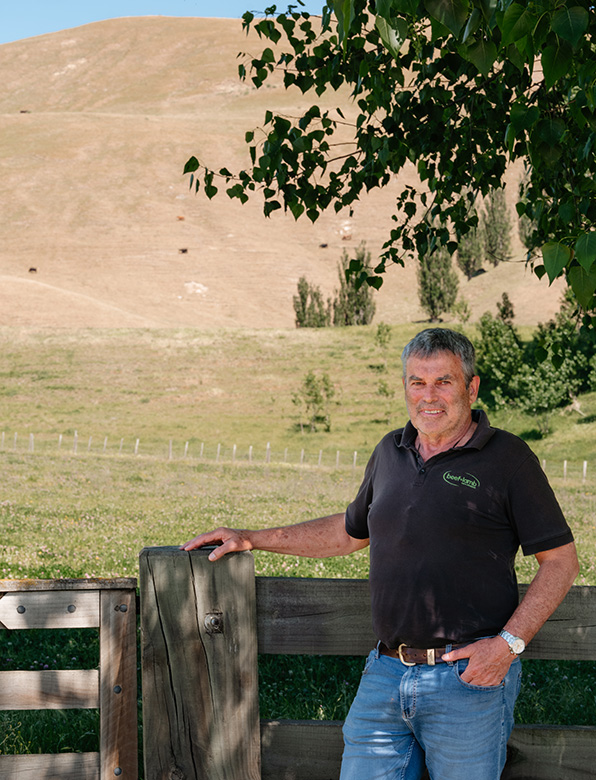
Mark Harris, Extension Manager Eastern North Island Beef + Lamb New Zealand, says that red meat prices have increased.
“What we were getting a year ago, to what we are getting now, is massively different. Farmers are in a better position than they expected.”
Better farm economics will see East Coast farmers spending to rebuild livestock numbers while national herd numbers decline, apply more fertiliser, catch up on deferred maintenance and reduce overall debt.
Harris describes farmers as being quietly confident, but acutely aware that things can change very quickly. “Prices are where they needed to be for farmers to feel like they aren’t between a rock and a hard place.”
The major risks to this tentative recovery are adverse weather conditions and a surge in the value of the NZ dollar that make our exports more expensive.
Three quarters of New Zealand’s red meat exports are denominated in USD, and Beef + Lamb is predicting that the NZD will appreciate against the USD by 6.5% in 25-26, which will lead to an 8.6% decrease in average farm gate beef prices.
“Farmers are unable to influence commodity prices, exchange rates, or the weather,” says Harris, “so they need to focus on the things they can control, and be prepared for potential downturns.”
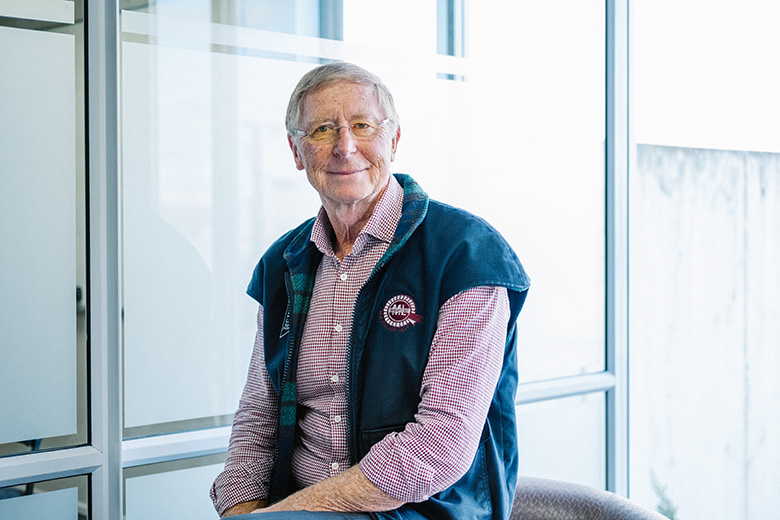
Craig Hickson, owner of Progressive Meats, says that beef numbers in the US are at a 70 year low.
“And because of that, prices are firm and will remain firm until US production catches up and then prices will ease.
“It’s enough to slow the rate of change (out of red meat production), but not enough to have people converting out of other land uses into sheep and beef.”
Hickson says changing land use is a 40 year trend on the Heretaunga Plains, and remains the biggest risk to ongoing red meat earnings in Hawke’s Bay. There’s been a lot of apple trees and vines planted on land where animals once grazed and on the East Coast replacing sheep and beef farming with pine tree plantations encouraged by the emissions trading scheme has been a significant trend.
The result is fewer animals grazing. Those that are left have been pushed off plains land and towards the hills by the economics.
Hickson says landowners have the right to choose how they make a living. “Naturally they choose the enterprise with the greatest level of return, taking into account the risk for that class of land.
“That is the underlying challenge for the pastoral red meat industry is to have, for the class of land that it’s in (which is now in the hills), a return that is competitive with other land uses, which is forestry,” he says.
Fertiliser a critical input
Fertiliser application is a bellwether for rural sector confidence and farm profitability. After a tough couple of years affected by fire and flood, and a near 30% drop in fertiliser application across the country, the outlook for Ravensdown’s Awatoto fertiliser plant is more positive following a new 35 year consent and a production-boosting multi-million dollar investment in the aftermath of Cyclone Gabrielle.
Bruce Wills, Ravensdown Chair says the Co-op has right-sized for the conditions, restructuring and closing its Dunedin manufacturing plant, leaving Awatoto as one of its two remaining facilities. He comments, “Demand for fertiliser has risen encouragingly this year, and our Awatoto plant is very busy – often seven days a week, which is great.”
Wills isn’t taking anything for granted, noting the uncertainty of the times, and the risk to New Zealand’s economy if our fertiliser supply chain was disrupted for any length of time.
“We’re living in extremely uncertain times. There’s significant geopolitical risk, climate change impacts, along with equity issues around the world. On top of that, there’s AI and social media. We’re planning for the worst, but hoping for the best,” Wills concludes.
Apples – not quite out of the woods
Apple growing is one of the biggest contributors to Hawke’s Bay, delivering an economic impact of $1.3 billion and employing more than 7,000 people.
Karen Morrish, CEO of NZ Apples and Pears says that the industry aims to deliver sustainable orchard gate revenue of $2 billion nationally by 2035, double what it achieved in 2024.

With nearly two thirds of the country’s apple plantings in Hawke’s Bay, that’s a lot of money coming into our orchards.
Morrish says the billion dollar success of 2024 is a nice headline.
“It’s given us a good year, but it’s one in isolation. It doesn’t make up for the four preceding it.
“The Covid years have had a long tail in terms of the volatility of shipping and logistics, and there are lot of those things which are strong headwinds.
“Another couple of years like this, and we will start to see orchardists having the confidence in redevelopment.”
Morrish says that 2025 is forecast to be better than 2024, and for grower confidence to continue will require an “alignment of the stars”, with weather, exchange rates, and markets all having to be favourable.
“It is a more challenging environment – in multiple ways – to grow.”
As for US tariffs, they’re not impacting directly, she says, because “we’re going into a very similar, if not the same tariff rate as competitors”, and the Kiwi apples heading to the States are a “very bespoke, high quality organic apple, and they still want that.”
One of the biggest risks to sustained recovery for Hawke’s Bay apple growers is the narrative around recovery from Cyclone Gabrielle, she says.
“We have to be very careful. We’re nearing recovery, it hasn’t fully recovered. There is optimism, there is future in the industry.”
To sustainably double revenues by 2035 won’t mean doubling the hectares, it will rely on markets, varieties grown, and productivity.
Speaking on challenges specific to Hawke’s Bay, Morrish cites the port, roading infrastructure and access to water.
“Our way out to export is the Napier Port. It has to be affordable and reasonable. It’s about making sure that the infrastructure around Hawke’s Bay primary produce grows as we do.
“And for water, it’s about making sure that water matches the requirements for the future of Hawke’s Bay’s economy.”
[Keith Newman digs deeper into HB’s apple future in his article in this mag, How’s them apples?]
Napier Port – our export gateway
Napier Port CEO Todd Dawson says that Hawke’s Bay’s prosperity depends on how well we anticipate and respond to shared challenges such as climate volatility, water security, trade and market uncertainty, and global geopolitical pressures.
“Each brings a different kind of risk – from weather-related supply disruptions and infrastructure stress, to shifting consumer demand and the flow-on effects of international conflict or trade policy. These realities influence how we operate day to day, while also shaping the long-term investments needed to keep the region’s supply chain resilient and competitive.
“We’re also seeing growing recognition of the need for a more coordinated ‘NZ Inc’ approach to national supply-chain resilience – ensuring ports, rail and road networks work together efficiently. By working closely with our customers and community, we’re helping to safeguard Hawke’s Bay’s trading future and ensure our region remains strongly connected to global markets,” says Dawson.
An economist’s view
Infometrics economist Rob Heyes says that farmers and growers continue to face the same challenges they face every year, such as seasonal labour shortages, biosecurity threats, and the ongoing risk of adverse weather events. Longer-term issues such as declining herd sizes, water management, soil health, competition for land use, infrastructure maintenance and resilience, and adaptation to climate change all add growing pressures.
“These issues are being compounded by near-term economic challenges and uncertainties such as continued recovery from Cyclone Gabrielle, household and business cost pressures, Resource Management Act (RMA) reforms, and US import tariffs.
“That said, it is not all doom and gloom. Nationally, horticulture export prices and volumes are at record levels and meat export prices remain elevated, even if volumes have come under downward pressure. But volatility and risks such as US import tariffs will remain.”
A key uncertainty, he says, is around the RMA reforms: whether fresh fruit production will be recognised as nationally significant, which will determine how land use and resource consents are managed under the reforms.
“If granted, horticultural activities on highly productive land will be prioritised and protected.”
US import tariffs are front of mind for many businesses. Currently, there is a 15% tariff (on top of any existing US tariffs) which is making New Zealand products less competitive in the US market and potentially squeezing revenue for exporters.
“Almost as concerning is the uncertainty around US tariff policy, with policy seeming to change on a daily basis, and challenges to the White House’s authority to impose tariffs currently being heard in the US Supreme Court,” says Heyes.
The tariffs affect key Hawke’s Bay exports such as wine, apples, kiwifruit, other fresh fruit, and meat. Wine is particularly exposed, with 35% of New Zealand’s wine exports going to the US in 2024. It remains to be seen how the 15% tariff will affect prices and demand. But with New Zealand wine exports to the US valued at NZ$692 million, any reduction in demand could hit growers’ finances hard. Meat producers are also exposed, with 30% of New Zealand’s meat exports going to the US in 2024. Meat is a much bigger revenue earner than wine, with New Zealand meat exports to the US valued at NZ$2.6 billion. New Zealand’s fruit exports are less exposed, with only 6.5% going to the US last year, valued at $307 million.
You don’t have to be an economist to understand that there’s little that even our best-performing primary producers can control. There are no guarantees. Our current successes are fragile. We hope for better times for all of our sectors and that our primary producers can ride out the weather, the volatility, and the uncertainty. We hope.
